



Does your skin feel tight, dry, and seem to have lost its radiance overnight? You’re not imagining things. Menopause is one of the most significant periods for the face and body, and its effects are very real, measurable, and well-documented. The good news is that understanding these mechanisms is the first step toward taking control. And there are natural ingredients that are remarkably well-suited to supporting this transition.
Why does menopause affect the skin?
It all starts with estrogen. These hormones, produced by the ovaries, have a direct impact on skin quality. They stimulate fibroblasts—the cells in the dermis responsible for synthesizing collagen, elastin, and hyaluronic acid. When menopause sets in, estrogen production drops sharply.
Immediate consequence: the production of supportive fibers slows down. Intradermal moisture reserves become depleted. Elastin fibers become disorganized. The skin loses thickness (about 6% per decade), suppleness, and comfort. This hormonal aging is compounded by chronological aging related to age and external aggressors such as the sun, tobacco, or pollution.
An in vitro study using dermal fibroblasts cultured at hormone concentrations typical of postmenopausal women showed a decrease in cell proliferation and collagen deposition, as well as an increase in the metalloproteinases MMP-1 and MMP-3, enzymes that break down the structural fibers of the dermis (Development of an in vitro model of menopause, International Journal of Cosmetic Science, 2013).
The visible signs: much more than just a few wrinkles
It would be a mistake to think that the effects of menopause on the skin are limited to expression lines. Here’s what actually happens:
- Dryness: A decrease in sebum production weakens the skin’s protective barrier. The skin feels tight, uncomfortable, and sometimes even itchy.
- Sagging and wrinkles: The loss of 30% of collagen within five years after menopause leads to visible sagging, especially on the face and neck.
- Pigment spots: Melanin-related issues become more pronounced, with the appearance of sunspots on areas exposed to the sun.
- Dull complexion: cell renewal slows down, and radiance fades.
- Increased sensitivity: The skin’s pH balance is disrupted, and women with eczema or rosacea may find their symptoms worsening.
Collagen, elastin, and hydration: a trio in jeopardy
These three components form the invisible framework of your skin. Collagen provides firmness. Elastin provides flexibility. Hyaluronic acid, a hygroscopic molecule in the dermis, maintains hydration by retaining up to 1,000 times its weight in water. The simultaneous decline of these three components explains the sudden acceleration of aging during menopause.
The production of structural fibers depends directly on fibroblast activity, which is stimulated by estrogen. Without this hormonal signal, the epidermis literally loses its supportive structure. Intradermal water reserves also contribute to the skin’s barrier function: when their levels decrease, dehydration accelerates and dryness sets in permanently.
Can we counteract this process? Good news: Partially, yes! When applied topically, low-molecular-weight moisturizing ingredients (around 100,000 Daltons) can penetrate down to the dermis, while high-molecular-weight ingredients remain on the surface and form a protective film. Hyaluronic acid injections fall under the category of aesthetic medicine and offer more immediate results. But before resorting to that, certain natural active ingredients are definitely worth your attention.
Omega-7 fatty acids from sea buckthorn: a valuable ally for managing menopause
Among the natural ingredients known to support the skin during menopause, sea buckthorn stands out. Why? Because of its omega-7 fatty acids. This rare fatty acid, palmitoleic acid, is the natural substance most similar to human sebum. It is easily absorbed and incorporated into the skin’s protective hydrolipidic film.
Omega-7 fatty acids help hydrate the mucous membranes and skin, support tissue regeneration, and have anti-inflammatory properties. They also contribute to collagen synthesis and may reduce the appearance of wrinkles. Sea buckthorn is the plant source with the highest concentration of omega-7, containing 20 times more than other fruits that contain it (macadamia nuts, olives, avocados).
According to a study by Larmo et al. (Maturitas, 2014), conducted on 116 postmenopausal women in a double-blind trial over 3 months, supplementation with 3 g/day of sea buckthorn oil showed that participants were 3.1 times more likely to improve the integrity of their mucosa compared to the placebo group. These significant results illustrate the potential of this active ingredient for postmenopausal women.
In addition to omega-7, sea buckthorn is a natural source of vitamin C (20 times more than an orange), vitamin E (4 times more than sunflower oil), and beta-carotene (10 times more than a carrot). A remarkable antioxidant cocktail to combat oxidative stress, which accelerates age-related aging.
Skincare Routine for Menopausal Skin: A Holistic Approach
Naturopath Myriam Lepetit-Brière points out: “About 75% of skin health is determined internally, by factors such as cell membranes, inflammatory and hormonal balance, and oxidative stress.” Adopting a suitable skincare routine on the surface isn’t enough if you neglect your nutrition from the inside.
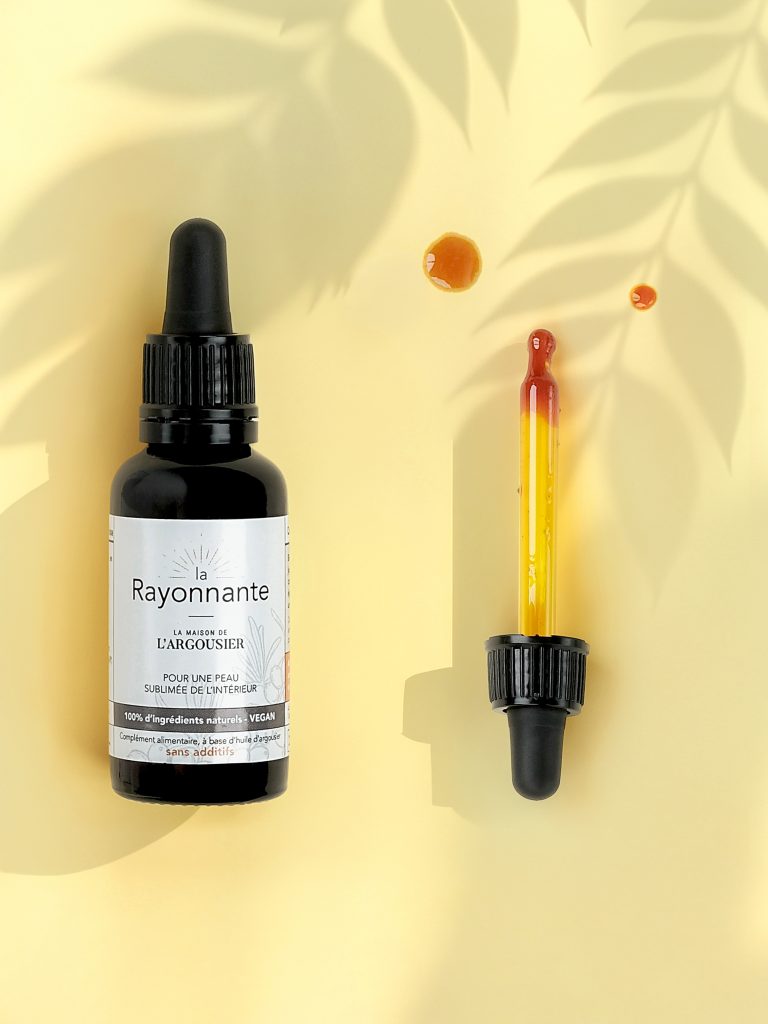
For internal use: we can recommend the supplement *La Rayonnante* from Maison de l’Argousier. It combines organic sea buckthorn berry oil, coenzyme Q10, lutein, and vitamin E. This combination helps nourish the mucous membranes, protect membrane lipids, and support regeneration. Many women report improved comfort within 3 to 4 weeks and softer skin in about a month.
For topical use:
- Gentle cleansing: a soap-free cleanser that doesn’t further dry out the skin’s protective barrier.
- Moisturize: a cream rich in essential fatty acids and moisturizing active ingredients such as Nutri Actif, for normal to dry skin, or Lissant Actif for oily skin. Formulated with the whole sea buckthorn berry, our creams maintain the natural balance of water and sea buckthorn oil to provide—beyond the sum of their active ingredients—an exceptional synergy for the skin.
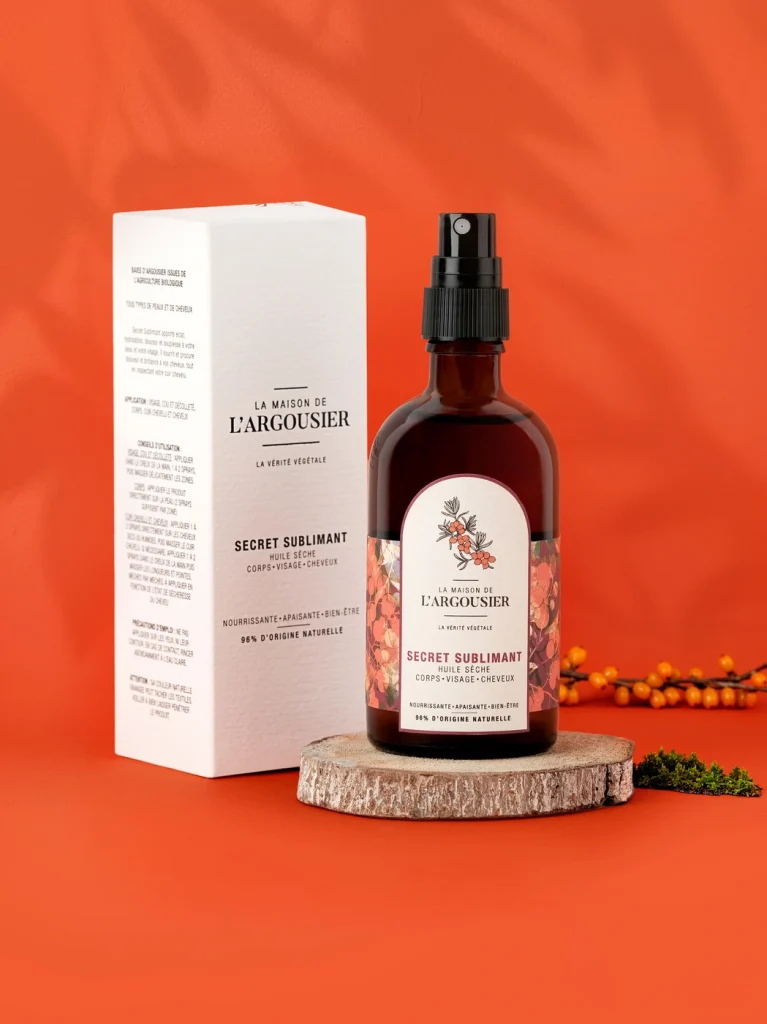
- Nourish: Maison de l’Argousier’s Secret Sublimant dry oil deeply nourishes without leaving a greasy residue, thanks to its sebum-regulating omega-7 fatty acids. Applied to the face before moisturizer or as a hair mask, it restores suppleness and protects against the effects of aging.
- Protect your skin from the sun: use sunscreen with an SPF of at least 30, and reapply every 2 hours. UVB rays accelerate collagen breakdown and contribute to the formation of dark spots.
- Boost cell renewal: The Secret of Radiance, derived from the bay’s native water, is rich in vitamin C and fruit acids, which provide all the antioxidants needed to promote your skin’s radiance and cell renewal.
THM: An Effective Treatment, but Not Without Its Questions
Hormone replacement therapy (HRT) has been shown to be effective for the skin. A study of 3,875 postmenopausal women found that estrogen therapy reduced dryness and wrinkles (odds ratio 0.68 in both cases). Topical estriol treatments increased skin thickness by 7 to 15% and collagen levels by 6.5%.
However, HRT is not suitable for all women, particularly those with a history of hormone-dependent cancer. The risk of breast cancer, although low, remains a topic of discussion in the medical community. This is why many women are seeking natural alternatives. And this is where active ingredients like omega-7, vitamin C, or resveratrol come into play: they do not replace hormone therapy, but offer complementary support without the same contraindications. Hormone-dependent cancer remains a major contraindication for HRT. Talk to your doctor to find the approach best suited to your situation.
Tips for a healthy lifestyle to protect your skin
Beyond skincare, certain daily habits can make a real difference in skin quality during menopause. Preventive medicine is placing increasing emphasis on these lifestyle habits:
- Internal hydration: Drink at least 1.5 liters of water a day. Thirst is already a sign of dehydration.
- A diet rich in antioxidants: berries, colorful vegetables, and fatty fish (omega-3). Eating a varied diet directly contributes to the firmness and suppleness of the skin, regardless of age.
- Sleep: The skin regenerates mainly at night. Aim for 7 to 8 hours of sleep.
- Quitting smoking: Smoking accelerates aging by limiting oxygen supply to tissues and damaging cellular DNA. Nicotinic acid also contributes to brittle nails.
- Physical activity: It stimulates blood circulation and oxygenation of the tissues. Sports medicine recommends at least 150 minutes of moderate-intensity activity per week.
- Stress management: yoga, meditation, sophrology. The skin and the brain share receptors and neurotransmitters.
FAQ
What are the effects of menopause on the skin?
The decline in estrogen during menopause leads to a drop in collagen (up to 30% over 5 years), as well as a reduction in intradermal hyaluronic acid and elastin. The skin becomes dry, thinner, and loses its firmness. Wrinkles deepen, pigment spots appear, and the complexion becomes dull. Dryness is sometimes accompanied by itching. These effects also affect the hair (possible hair loss) and nails (becoming brittle).
How can you maintain healthy skin during menopause?
A comprehensive approach is essential. Internally: adopt a diet rich in antioxidants and fatty acids (omega-3, omega-7), stay well-hydrated, and get enough sleep. Externally: adopt a suitable skincare routine with moisturizing and nourishing ingredients, and protect your skin from the sun with an SPF of at least 30. Sea buckthorn-based dietary supplements like La Rayonnante can help support hydration and comfort of the mucous membranes.
What are the facial symptoms of menopause?
On the face, menopause manifests as accelerated sagging, deeper wrinkles, a dull complexion, the appearance of dark spots, and persistent dryness. During perimenopause, some women also experience acne linked to hormonal imbalances between estrogen, progesterone, and androgens. The skin may become more reactive and sensitive.
Are there any natural alternatives to hormonal skin treatments?
Yes, several natural ingredients show promising results. The omega-7 fatty acids in sea buckthorn support the protective barrier and hydration of the mucous membranes. Vitamin C stimulates collagen synthesis. Vitamin E protects against oxidative stress. Resveratrol, a polyphenol found in grapes, activates sirtuins, which protect DNA. These ingredients do not replace hormone therapy but offer complementary support. Consult your doctor for personalized advice.
Taking care of your skin during menopause: a simple step that makes a difference
Menopause profoundly transforms the skin—that’s a fact. Decreased collagen, dryness, wrinkles, sagging: the effects are numerous and can sometimes be unsettling. But understanding these mechanisms allows us to address them more effectively. Natural active ingredients such as omega-7 from sea buckthorn, vitamin C, and vitamin E offer valuable support, whether applied topically or taken orally. Combined with a healthy lifestyle and a tailored skincare routine, they help preserve the skin’s firmness, hydration, and radiance. Your body is changing, but you hold the keys to supporting it through this transition.
The information provided is for informational purposes only and does not constitute medical advice. Consult your doctor or pharmacist.
Sources and references
- Larmo PS et al., “Effects of sea buckthorn oil intake on vaginal atrophy in postmenopausal women: A randomized, double-blind, placebo-controlled study,” Maturitas, 2014. Read on PubMed
- Vernet, A., “Sea Buckthorn (Hippophae rhamnoides L.),” Phytothérapie, vol. 4, pp. 125–129, 2006. Read on Springer
- Menvielle-Bourg, F. J., “Plants and Aging: Current Data,” Phytothérapie, vol. 3, pp. 57–71, 2005. Read on Springer
- Eurofins EVIC France clinical trial, study STUVY23AA0274-1, Nutri-Actif cream (internal data from Maison de l’Argousier, 2023).
- Cohen-Letessier, A., “Skin and Menopause,” Genesis No. 185, June/July 2015.


 Free shipping when you buy 2 or more items!