


Pourquoi l’acné hormonale apparaît chez la femme adulte
L’acné hormonale a une origine précise : un déséquilibre entre androgènes, œstrogènes et progestérone. Lorsque les androgènes prennent le dessus, ils stimulent les glandes sébacées du visage. Résultat : une surproduction de sébum qui obstrue les pores, favorise la prolifération de la bactérie Cutibacterium acnes, et déclenche l’inflammation.
Chez la femme adulte, cette acné se distingue de celle de l’adolescence. Les lésions se concentrent sur le bas du visage : menton, mâchoire, parfois le cou. On parle de distribution « en U ». Les boutons sont souvent profonds, inflammatoires, douloureux. Ils reviennent de façon cyclique, ce qui est un indice fort de leur origine hormonale.
Les causes de ces fluctuations hormonales sont multiples :
- Le cycle menstruel : 60 à 70 % des femmes observent une recrudescence de l’acné 7 à 10 jours avant les règles, au moment où la progestérone augmente et les œstrogènes diminuent.
- La ménopause et la périménopause : la chute des œstrogènes laisse le champ libre aux androgènes résiduels, provoquant l’apparition de lésions chez des femmes qui n’en avaient jamais eu.
- Le syndrome des ovaires polykystiques (SOPK) : cette pathologie entraîne une production excessive d’androgènes et figure parmi les causes fréquentes d’acné persistante.
- L’arrêt ou le changement de contraception : certaines pilules contenant des progestatifs androgéniques peuvent aggraver l’acné, tout comme l’arrêt d’une pilule anti-androgénique.
La prédisposition génétique joue également un rôle : elle est retrouvée dans environ 50 % des cas.
Stress, alimentation et mode de vie : des facteurs aggravants sous-estimés
Le stress chronique est un accélérateur redoutable de l’acné hormonale. Le cortisol, hormone du stress, stimule directement les glandes sébacées et amplifie l’inflammation cutanée. La vie urbaine, le cumul des responsabilités professionnelles et familiales, le manque de sommeil : autant de facteurs qui nourrissent ce cercle vicieux.
L’alimentation intervient aussi. Des études cliniques ont pointé l’impact des aliments à index glycémique élevé sur les poussées d’acné. Sucres raffinés, produits laitiers et aliments ultra-transformés favorisent l’inflammation et peuvent aggraver l’acné hormonale. À l’inverse, une alimentation riche en oméga-3, en zinc et en antioxydants contribue à réguler la production de sébum.
Quelques habitudes simples font aussi la différence : éviter de toucher son visage, nettoyer régulièrement son téléphone (ce fameux écran plaqué contre la joue…), et bannir les produits cosmétiques comédogènes qui étouffent les pores.
Comment savoir si votre acné est hormonale
Plusieurs signes doivent vous mettre la puce à l’oreille. L’acné hormonale chez la femme adulte se reconnaît à :
- Une localisation caractéristique : menton, mâchoire, cou, parfois les joues.
- Des poussées cycliques, souvent synchronisées avec le cycle menstruel ou les épisodes de stress intense.
- Des lésions inflammatoires profondes : papules, pustules, microkystes plutôt que de simples points noirs.
- Une résistance aux traitements classiques qui fonctionnaient à l’adolescence.
Seul un médecin ou un dermatologue peut poser le diagnostic avec certitude. L’examen physique, l’historique de santé et éventuellement un bilan hormonal permettent de confirmer l’origine hormonale et d’écarter d’autres causes : rosacée, acné fongique, acné médicamenteuse. La réalisation d’un bilan sanguin n’est pas systématique, sauf en cas de suspicion de SOPK ou d’hyperandrogénie.
Les traitements médicaux de l’acné hormonale
Le dermatologue adapte le traitement en fonction de l’âge, de la sévérité des lésions, des antécédents médicaux et du désir éventuel de grossesse. Comptez au minimum 3 mois pour évaluer l’efficacité d’un traitement.
En première intention, les traitements topiques sont privilégiés : peroxyde de benzoyle, rétinoïdes topiques (adapalène, trétinoïne), parfois associés à un antibiotique local. Ces traitements locaux sont remboursés par l’Assurance Maladie sur prescription.
En cas d’acné modérée à sévère, le médecin peut prescrire des antibiotiques oraux de la famille des cyclines, en cure limitée à 3 mois pour éviter les résistances bactériennes. L’isotrétinoïne (anciennement Roaccutane) reste réservée aux formes sévères, avec un suivi strict imposé par l’ANSM et une contraception obligatoire.
Les traitements hormonaux constituent une option clé. Une pilule contraceptive à activité anti-androgénique peut réguler les hormones responsables des boutons. La spironolactone, diurétique à action anti-androgène, se révèle particulièrement efficace sur les lésions de la zone mandibulaire, bien que son utilisation reste hors autorisation de mise sur le marché pour cette indication.
Approches naturelles : oméga-7, zinc et séborégulation par l’argousier
Pour les femmes qui cherchent des alternatives naturelles à la pilule ou à la spironolactone, plusieurs pistes méritent attention. Et parmi elles, l’argousier occupe une place singulière.
Les oméga-7 (acide palmitoléique) possèdent une action anti-inflammatoire et séborégulatrice documentée. L’acide palmitoléique est l’un des constituants naturels du sébum humain : il est donc parfaitement reconnu et intégré par la peau. Seuls 4 fruits au monde contiennent des oméga-7 en quantité significative, et la baie d’argousier en offre une concentration au moins 20 fois supérieure aux autres sources.
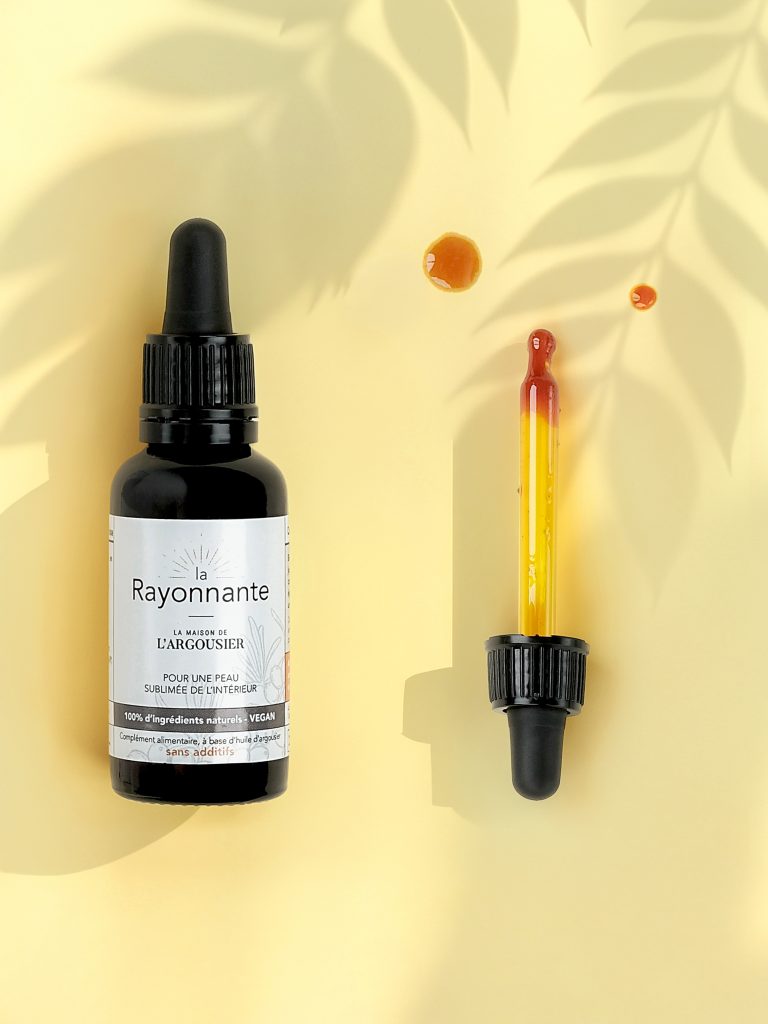
C’est là qu’intervient La Rayonnante de la Maison de l’Argousier, un nutricosmétique à base d’huile de baies d’argousier bio, enrichi en coenzyme Q10, lutéine et vitamine E. Seulement 4 ingrédients, 100 % naturels. La naturopathe Myriam Lepetit-Brière confirme : « En naturopathie, nous savons qu’environ 75 % de la qualité de la peau se joue à l’intérieur : au niveau des membranes cellulaires, de l’équilibre inflammatoire et hormonal. » Agir de l’intérieur, voilà le principe.
Le zinc est un autre allié reconnu. Ses vertus anti-inflammatoires, antibactériennes et cicatrisantes en font un complément fréquemment recommandé par les dermatologues pour l’acné de la femme adulte.
Parmi les autres pistes explorées : le gattilier (vitex), le DIM (diindolylméthane) ou encore l’inositol, notamment en cas de SOPK. Toutefois, ces approches nécessitent un suivi médical pour ajuster les dosages.
Routine skincare adaptée aux peaux à tendance acnéique
Quand l’acné hormonale s’installe sur le visage, la tentation est grande de décaper la peau. Erreur classique. Une peau acnéique adulte a besoin de douceur, de séborégulation et d’hydratation.
Voici les étapes d’une routine efficace :
- Nettoyer sans agresser : un nettoyant doux, sans savon, matin et soir.
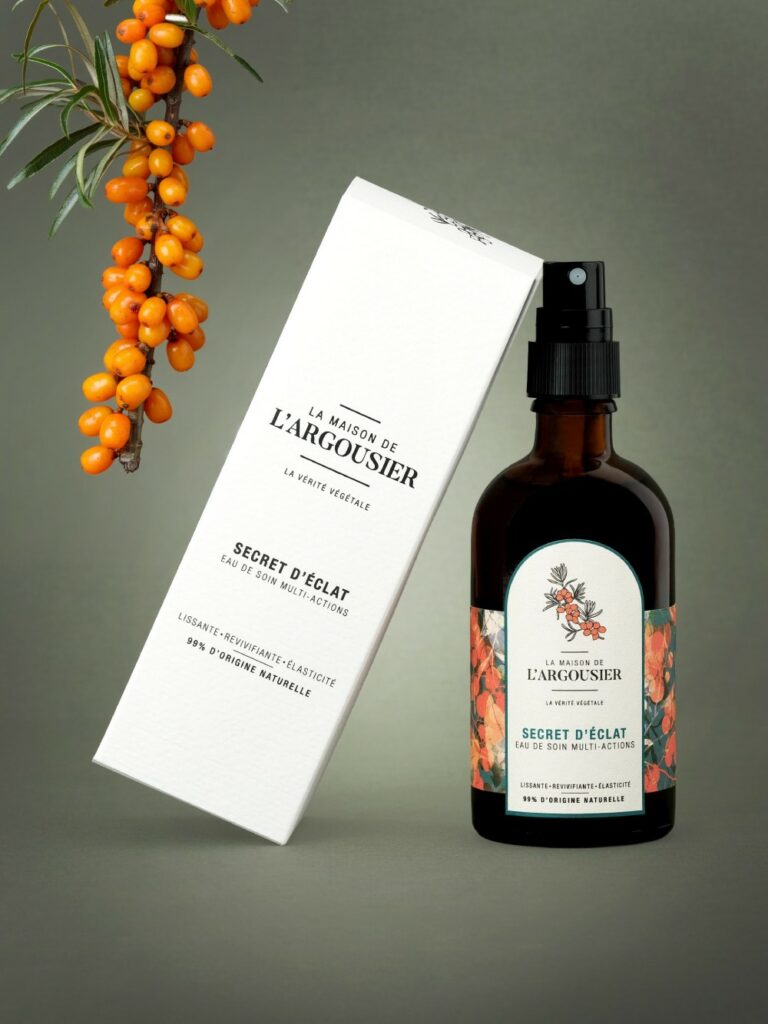
- Purifier et apaiser : le Secret d’Éclat de la Maison de l’Argousier est formulé à base d’eau native de baie d’argousier, riche en acide malique et en vitamine C. Cet acide nettoie les pores, favorise l’élimination des bactéries et réduit l’inflammation. Tests cliniques sur 22 volontaires pendant 21 jours : 100 % de peaux plus lisses, apaisées et purifiées.
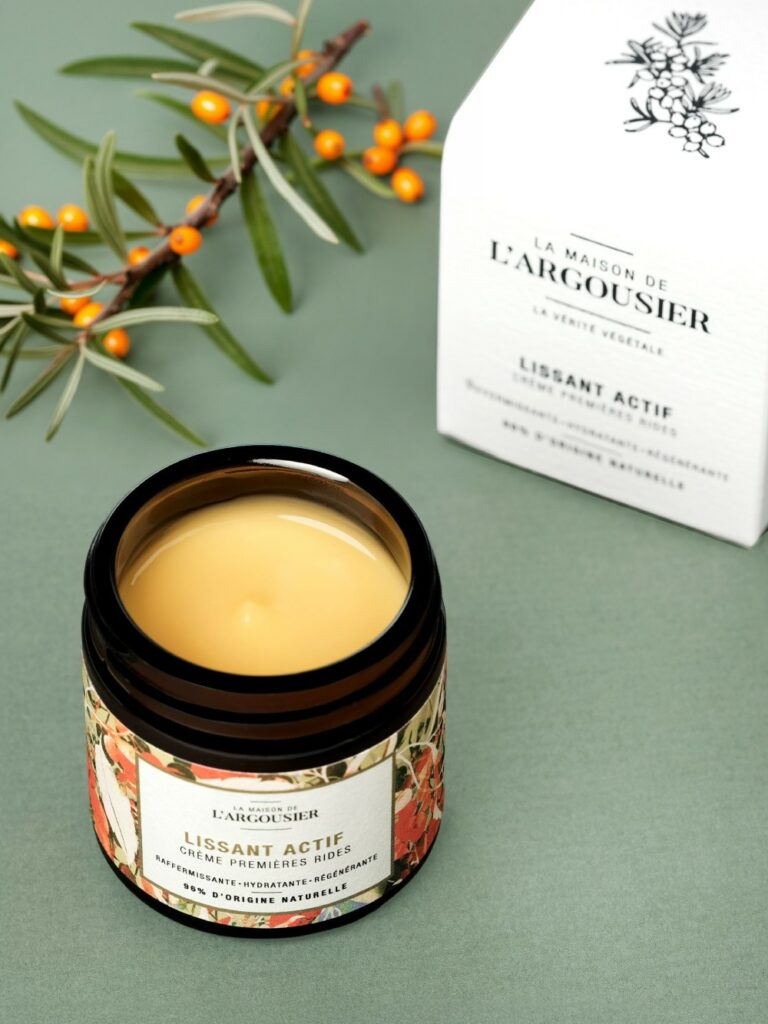
- Hydrater et réguler le sébum : le Lissant Actif, crème séborégulatrice et antioxydante, hydrate sans laisser de film gras. Un positionnement rare pour les peaux à tendance acnéique qui redoutent les textures riches. La synergie entre l’eau native (vitamine C) et l’huile de baie d’argousier reconstitue le totum naturel de la baie pour une action complète.
Évitez les produits contenant des huiles essentielles ou des actifs irritants. Et bien sûr, ne percez jamais un bouton : vous risquez des cicatrices pigmentées, bien plus tenaces que le bouton lui-même.
Acné hormonale et ménopause : un cas particulier
L’apparition de boutons à la ménopause surprend souvent. Pourtant, la chute brutale des œstrogènes crée un déséquilibre hormonal favorable aux androgènes. Les glandes sébacées, stimulées par ces changements hormonaux, produisent davantage de sébum. Paradoxalement, la peau mature est souvent plus sèche globalement, tout en présentant des zones grasses et des imperfections.
Cette dualité exige des soins capables de nourrir sans obstruer les pores. Les oméga-7 de l’argousier répondent précisément à cette problématique : ils hydratent les muqueuses et la peau en profondeur, tout en exerçant une action séborégulatrice qui fonctionne dans les deux sens (régule l’excès comme le déficit de sébum).
Quand consulter un dermatologue
Si vos boutons persistent au-delà de 3 mois malgré une routine adaptée, si les lésions sont profondes ou douloureuses, si elles laissent des cicatrices : consultez. Un dermatologue pourra évaluer la sévérité, prescrire un traitement adapté et vous orienter vers un bilan hormonal si nécessaire.
L’acné hormonale chez la femme adulte n’est pas une question de « mauvaise hygiène ». C’est une réalité biologique qui mérite une prise en charge sérieuse, entre accompagnement médical et approches naturelles complémentaires. En agissant à la fois de l’intérieur (alimentation, gestion du stress, compléments ciblés) et de l’extérieur (soins séborégulateurs et anti-inflammatoires), vous donnez à votre peau toutes les chances de retrouver son équilibre.
Les informations présentées sont données à titre informatif et ne constituent pas un avis médical. Consultez votre médecin ou pharmacien.
Sources et références
- Assurance Maladie (Ameli.fr), « Acné : qu’est-ce que c’est ? », 2023 — ameli.fr
- Données internes La Maison de l’Argousier : tests cliniques Secret d’Éclat (scorage dermatologue, protocole 21 jours, 22 volontaires, organisme agréé)
- « Les Oméga-7 sont particulièrement bénéfiques pour lutter contre certains problèmes de peau, notamment l’acné » (La bible de l’argousier)
Questions fréquentes
Comment se débarrasser de l’acné hormonale adulte ?
L’acné hormonale chez la femme adulte nécessite une approche sur plusieurs fronts. Un dermatologue peut prescrire un traitement topique (peroxyde de benzoyle, rétinoïdes) ou hormonal (pilule anti-androgénique, spironolactone). En complément, une routine skincare séborégulatrice, une alimentation à index glycémique bas, la gestion du stress et des compléments comme le zinc ou les oméga-7 d’argousier peuvent contribuer à réduire les poussées. Comptez au minimum 3 mois pour observer les premiers résultats.
Comment savoir si c’est de l’acné hormonale ?
Plusieurs indices distinguent l’acné hormonale d’autres types d’acné. Les boutons se concentrent sur le menton, la mâchoire et le bas du visage. Ils sont souvent profonds et inflammatoires (papules, microkystes). Les poussées sont cycliques, liées au cycle menstruel ou aux périodes de stress. Si vous n’aviez pas d’acné à l’adolescence et qu’elle apparaît après 25 ans, la piste hormonale est probable. Un médecin confirmera le diagnostic.
Quel est le lien entre acné hormonale et cycle menstruel ?
Les fluctuations hormonales du cycle menstruel influencent directement la production de sébum. En phase prémenstruelle (7 à 10 jours avant les règles), la progestérone augmente tandis que les œstrogènes diminuent. Ce déséquilibre stimule les glandes sébacées, ce qui favorise l’obstruction des pores et l’apparition de boutons. Selon les données de l’Assurance Maladie, 60 à 70 % des femmes observent une aggravation de leur acné durant cette phase.
Quel stérilet choisir quand on a de l’acné hormonale ?
Le choix du stérilet en cas d’acné hormonale mérite une discussion avec votre médecin. Le stérilet hormonal au lévonorgestrel peut, chez certaines femmes, aggraver l’acné en raison de son activité progestative. Le stérilet au cuivre, sans hormones, n’a en revanche pas d’effet direct sur l’acné. Votre dermatologue et votre gynécologue pourront vous conseiller le type de contraception le plus adapté à votre profil hormonal.


 Livraison offerte dès 2 produits achetés !