


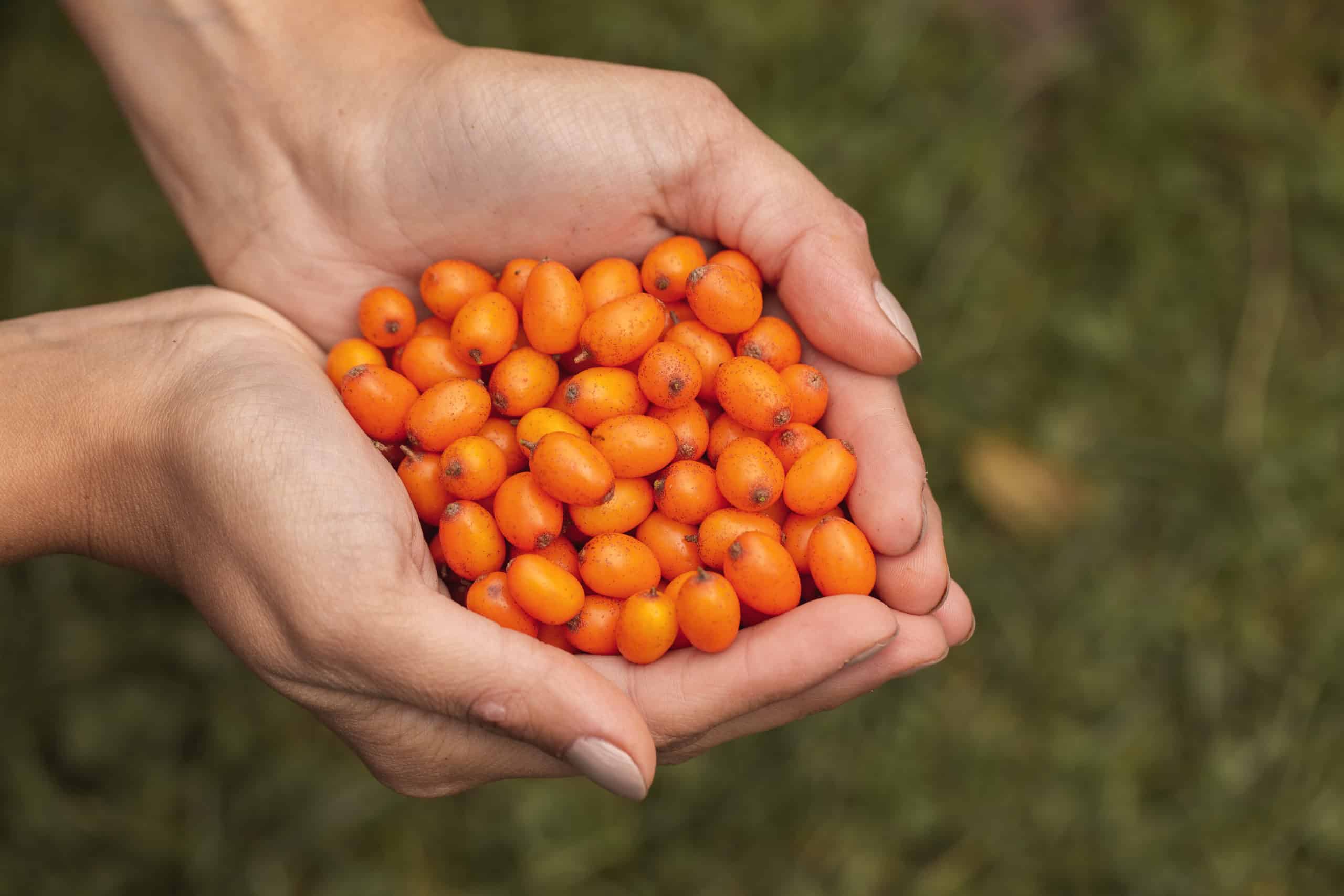
Sea buckthorn deserves a closer look, based on the available data. Its antioxidant properties have been confirmed in the lab, and it has a fatty acid profile found almost nowhere else in the plant kingdom. So, are these real benefits or just a fad? Let’s take a closer look at each one.
What Sea Buckthorn Berries Actually Contain
Sea buckthorn (Hippophae rhamnoides) is a thorny shrub native to the Eurasian plateau. Its small berries, which are a vibrant orange color due to carotenoids, contain a nutritional cocktail of rare density. The watery part of the berry alone is packed with countless nutrients: vitamin C, B vitamins, vitamin K, flavonoids, amino acids, and minerals.
Here are a few key figures to put this wealth into perspective:
- Vitamin C: about 360 mg per 100 g of fruit, which is nearly nine times the amount found in an orange. Only acerola and camu-camu come close.
- Beta-carotene: nearly 10 times more than in a carrot. No fewer than 40 different carotenoids have been identified in the berry oil.
- Vitamin E: Four times more than sunflower oil, primarily in the form of alpha-tocopherol.
- Omega-7 (palmitoleic acid): Sea buckthorn is by far the plant that contains the most of it. Only four fruits in the world contain it, and sea buckthorn berries contain at least 20 times as much.
- Omega-3, 6, and 9: a complete profile of essential fatty acids, which is exceptional for a fruit.
A doctoral thesis conducted at the University of Orléans (ICOA / INSERM / CNRS) by Thomas Michel identified 3 phenolic acids and 20 flavonol derivatives in sea buckthorn berries, with antioxidant activity demonstratedin vitroandin cellulo(Michel, 2011, University of Orléans). This antioxidant potential is directly correlated with the presence of flavonoids and proanthocyanidins.
Benefits of Sea Buckthorn for the Skin
For beautiful skin
Will your skin really be different? Here’s what we know. Palmitoleic acid (omega-7) is a natural component of the human skin’s lipid layer. In other words, it’s the natural substance in the world that most closely resembles human sebum. This fatty acid “speaks your skin’s language.” It strengthens the epidermis’s hydrolipidic film, limits water evaporation, and maintains suppleness and softness.
When it comes to skin aging, sea buckthorn flavonoids promote collagen synthesis and help maintain the skin’s elasticity. Carotenoids and vitamin E neutralize free radicals responsible for premature aging. Sea buckthorn oil helps reduce the appearance of wrinkles on mature skin thanks to this dual action: deep nourishment and antioxidant protection.
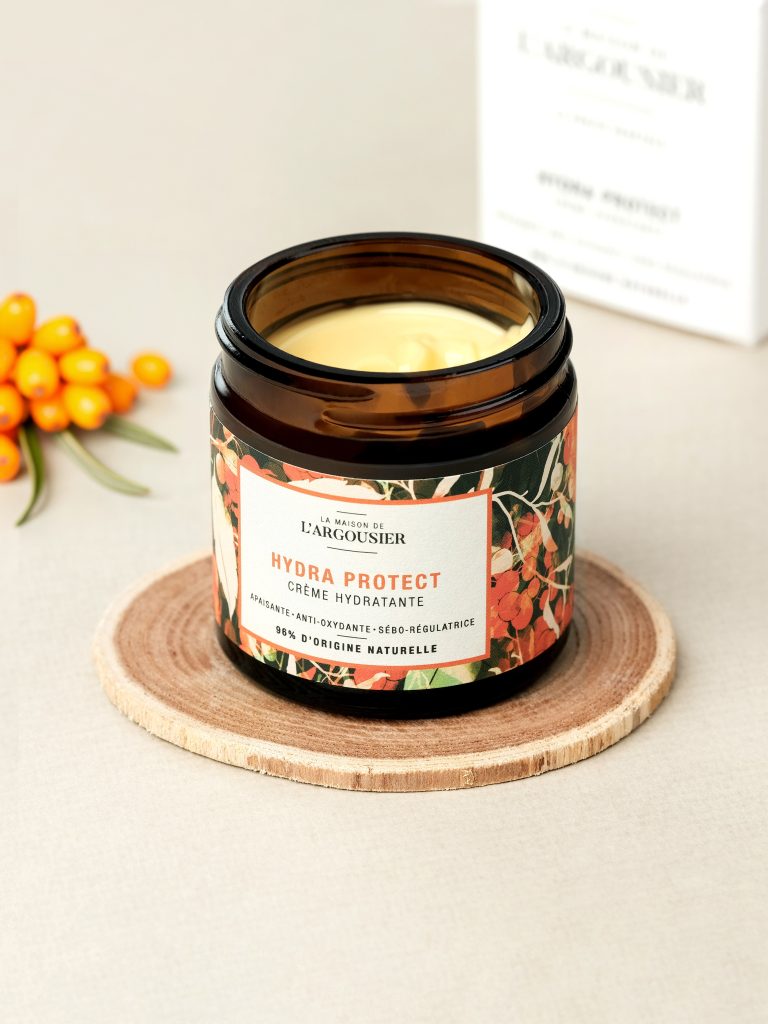
La Maison de l’Argousier has taken this concept a step further by formulating its skincare products with both the berry’s natural juice (rich in vitamin C, polyphenols, and malic acid) and its plant oil (rich in omega-7, vitamin E, and carotenoids).Hydra Protect, for example, hydrates the skin while regulating sebum production in both directions: it is suitable for both oily and dry skin. This approach, which recreates the berry’s complete composition, offers far more than the sum of its individual active ingredients.
For skin repair
Sea buckthorn also has a long history of use in wound healing and the treatment of burns, documented across several continents. During the war in Afghanistan, the Red Army confiscated the Lithuanian harvest to make ointments for treating wounds and burns caused by incendiary bombs.
In Tibetan medicine, simply rubbing a scratch with the juice of a berry was enough to relieve the pain: the wound would not become infected and would heal in record time, an effect attributed to the fruit’s oily nature. Siberian medicine also uses boiled berries to promote wound healing and soothe burns and frostbite. This healing action is largely due to the berry’s high vitamin C content—known to accelerate healing and protect the skin—and the incredible properties of Omega-7. Even today, sea buckthorn oil remains on the official Russian list of medicines for treating skin and mucous membrane conditions, and Russian surgeons commonly carry a bottle with them to treat scrapes and bruises.
Is sea buckthorn oil comedogenic? The issue of oily skin
This is the question every woman with combination or oily skin asks herself. And rightly so. Sea buckthorn oil has well-documented sebum-regulating properties, which are directly linked to its omega-7 content. Palmitoleic acid, which is very similar to human sebum, helps the skin rebalance its oil production rather than adding more oil.
The Secret Sublimant by Maison de l’Argousier exemplifies this unique feature: it is a dry oil that deeply nourishes without leaving a greasy film. It can be applied under a moisturizer or used as a hair mask. What really sets it apart? Its sebum-regulating omega-7 fatty acids, combined with a texture that absorbs into the skin without leaving it greasy.
Sea buckthorn and the mucous membranes
Beyond its benefits for the skin, sea buckthorn has a remarkable effect on the body’s mucous membranes—the delicate tissues that line internal cavities, whose hydration balance is key to daily well-being. The naturally occurring compounds in the berry help protect the mucous membranes of the mouth, esophagus, stomach, and intestines, reducing irritation and inflammation.
Tibetan medicine places particular emphasis on the oil’s effects on these tissues, and a 19th-century Mongolian treatise highlights its ability to strengthen weakened mucous membranes. In Russia, sea buckthorn oil is officially prescribed to soothe inflammation of the oral mucosa and throat, as well as to treat vaginal infections and inflammation of the uterine lining and cervix: a gynecological use documented for several decades. It is also incorporated into balms for eye conditions, an area where its high fatty acid content provides nourishment and relief. This broad spectrum of action is due to the berry’s unique composition, which combines unsaturated fatty acids, carotenoids, and vitamins—a rare synergy seldom found in the plant kingdom.
Sea buckthorn and dry hair: tangible results
Sea buckthorn berries have been used since ancient times to beautify the coat. The Greeks fed these berries to their horses to make their coats shiny and lustrous. The same principle applies to human hair. The unsaturated fatty acids in sea buckthorn oil boost cell renewal in the scalp. Vitamin E protects keratin from oxidative stress. Palmitoleic acid deeply nourishes without weighing hair down.
For dry and damaged hair, Secret Sublimant can be used as a pre-shampoo hair mask. After just a few uses, your hair will regain its softness and shine.
Health Benefits of Sea Buckthorn When Taken Orally
Sea buckthorn isn't just for cosmetics. As a dietary supplement, its nutritional profile supports several essential functions.
Digestive Health and Liver Protection
Sea buckthorn oil is known for its ability to soothe the digestive tract. It helps protect the stomach lining, an effect attributed to the sterols it contains. For the liver, the antioxidants in sea buckthorn (tocopherols, tocotrienols, carotenoids) provide protection comparable to that of milk thistle, according to available data.
Cardiovascular Health and Metabolism
Sea buckthorn may help lower blood cholesterol and triglyceride levels. Palmitoleic acid promotes a feeling of fullness and helps reduce insulin resistance. Omega-7 fatty acids may also help reduce the accumulation of visceral fat. These combined effects make it a valuable aid for cardiovascular health and weight management.
How to Identify High-Quality Sea Buckthorn Oil
Not all oils are created equal, and that’s where your high standards will pay off. Here are a few things to look for:
- Extraction method: Opt for an extraction process that uses no solvents or heat. Enzymatic extraction preserves all the properties of the active ingredients.
- Traceability: A high-quality oil comes from a carefully managed supply chain, from the plantation to the final formulation. The Clara variety is recognized as one of the richest in active ingredients.
- Freshness: Rapid freezing after harvest (within 2 hours) prevents the oxidation of valuable omega fatty acids and vitamins.
- Color: Authentic sea buckthorn oil has a natural orange hue, reflecting its high beta-carotene content. Be wary of products that are too light in color or colorless.
- Ingredients: Make sure the formula uses oil derived from the whole berry (seeds and pulp), as their fatty acid profiles complement each other.
Side effects and contraindications of sea buckthorn
There are no known established contraindications for sea buckthorn oil. No specific precautions for use have been reported.
That said, let’s be practical: as with any health product, start with small amounts and see how your body reacts. If you have any doubts or are currently undergoing treatment, it’s always a good idea to consult a doctor.
The information provided is for informational purposes only and does not constitute medical advice. Consult your doctor or pharmacist.
FAQ
What are the benefits of sea buckthorn?
Sea buckthorn offers a remarkable range of health benefits. Its berries are a powerful antioxidant thanks to their flavonoids and carotenoids. They support the immune system due to their high vitamin C content (360 mg/100 g). Omega-7 fatty acids nourish the skin and mucous membranes. Sea buckthorn also has anti-inflammatory properties, promotes digestive health by protecting the intestinal mucosa, and supports cardiovascular health by helping to regulate cholesterol and triglycerides.
What are the benefits of sea buckthorn for the liver?
Sea buckthorn supports liver function and helps protect the liver. Its natural antioxidants (tocopherols, tocotrienols, carotenoids) provide protection comparable to that of milk thistle. Omega-7 fatty acids help reduce the storage of visceral fat and contribute to lowering insulin resistance, which helps prevent fatty liver disease. The choline present in the berries counteracts fat storage and regulates digestion.
What are the possible side effects of sea buckthorn juice?
No significant side effects have been reported for sea buckthorn. As a precaution, start with small amounts and consult your doctor if you are taking any medications.
Is it safe to consume sea buckthorn on a daily basis?
Sea buckthorn has been used daily for thousands of years in traditional Chinese, Tibetan, and Ayurvedic medicine. The earliest reference dates back to the 8th century in a Tibetan treatise. As a dietary supplement, a daily dose is entirely appropriate. The complexity of sea buckthorn’s composition suggests that its effects are due to the synergy of its components rather than to a single isolated active ingredient.
Sea buckthorn: a power player to be taken seriously
Let’s recap. Sea buckthorn berries need no superlatives. Their nutrients, the 20 flavonols identified in the lab, the omega-7 fatty acids found nowhere else in such high concentrations, and their vitamin C content—nine times that of oranges—speak for themselves. For the skin, sea buckthorn hydrates, nourishes, and protects against skin aging. For overall health, it supports immunity, liver function, digestion, and metabolism.
What sets it apart? The quality of the extraction process and traceability. Whether you choose sea buckthorn oil for skincare or as a dietary supplement, insist on a transparent supply chain, a gentle extraction process, and a formulation that preserves the berry’s full spectrum of nutrients. Your skin and your body will feel the difference.
Sources and references
Data from scientific reports by La Maison de l’Argousier (in vitro analyses: antioxidant and anti-inflammatory activity; presence of quercetin confirmed by enzymatic extraction certified organic and COSMOS).
Thomas Michel,New Methods for Extraction, Fractionation, and Identification: Application to Bioactive Molecules from Sea Buckthorn (Hippophae rhamnoides), Ph.D. thesis, ICOA / University of Orléans / INSERM / CNRS, 2011.View the thesis
Jacques Fleurentin, pharmacist and president of the French Society of Ethnopharmacology.Interview with Santé Magazine
Luetjohann, S. (2002). Sea Buckthorn: An Energy-Packed Fruit and Beneficial Oil.


 Free shipping when you buy 2 or more items!