



A shiny forehead at 11 a.m., tight cheeks at 3 p.m.: combination skin just won’t pick a side. If you’ve ever felt like every skincare product was either too rich or too drying, you know this dilemma all too well. The good news? A well-designed routine for combination skin, featuring smart sebum-regulating ingredients, is all it takes to restore balance. No compromises, no overcomplicated formulas.
Combination skin: what’s really going on beneath the surface?
Combination skin isn’t just a vague middle ground between oily and dry skin. It’s a distinct skin type—one of the most common in France—where two areas of the face behave in opposite ways.
In practical terms, the forehead, nose, and chin produce excess sebum. The result: enlarged pores, blackheads, and shine. The cheeks and the area around the mouth, on the other hand, lack protective lipids. They feel tight, become irritated, and sometimes redden. This imbalance makes choosing the right skincare particularly tricky: a cream that’s too rich accentuates shine on the forehead and nose, while a foaming gel that’s too harsh can dry out the cheeks.
What are the contributing factors? Genetics play a major role. Hormonal fluctuations (menstrual cycles, pregnancy, menopause) affect sebum production. Stress, pollution, hard tap water, and even an unbalanced diet can exacerbate the problem. In other words, your skin isn’t being fussy—it’s a biological reality that calls for targeted care.
Morning routine for combination skin: 3 steps in 5 minutes
The morning routine for combination skin is based on a simple principle: cleanse, moisturize without leaving a greasy residue, and protect. Nothing more, nothing less.
Cleanse, nourish, protect: this sequence isn’t just for combination skin. It forms the foundation of any effective skincare routine, regardless of your skin type. To understand the logic behind each step and tailor it to your needs, check out the detailed steps of a sea buckthorn skincare routine. You’ll find the precise order of application, from the lightest to the richest product.
Step 1: Cleanse with a skincare product rich in malic acid
Forget about harsh foaming gels first thing in the morning. Combination skin needs a gentle yet effective cleanser that removes overnight impurities without stripping the hydrolipidic film from your cheeks. Malic acid, a fruit acid naturally found in sea buckthorn, gently cleanses pores, limits bacterial growth, and reduces inflammation. That’s exactly what Maison de l’Argousier’s Secret d’Éclat does: this skincare water made with organic native sea buckthorn water purifies and rebalances the texture of skin prone to both oiliness and dryness. Clinical results: 100% of volunteers noticed smoother, soothed, and purified skin after 21 days of use (Eurofins test under dermatological supervision).
Step 2: Nourish and regulate oil production with a dry oil
Using oil on combination skin? You might raise an eyebrow, and that’s understandable. But not all oils are created equal. The omega-7 fatty acids in sea buckthorn are the closest match to the human lipid barrier. They regulate sebum production in two ways: they curb it where it’s excessive and boost it where it’s lacking (on the cheeks). Le Secret Sublimant, a dry oil made with organic sea buckthorn oil, deeply nourishes without leaving a greasy film. In clinical tests, 95% of participants noticed softer, smoother skin, and 91% saw more hydrated and toned skin in 14 days. Apply a few drops to the palm of your hand and gently pat all over the skin. No more tightness, and no excess shine.
This ability of omega-7s to regulate sebum in both directions explains why sea buckthorn is so well-suited for combination skin. To better understand how this oil affects skin balance, how to apply it, and its effects on your complexion, check out our comprehensive guide tosea buckthorn oil for balancing facial skin. You’ll also find the right dosage to achieve a healthy glow without overloading your skin.
Step 3: Suitable moisturizer + nutricosmetics
This is where you can customize your routine for combination skin. Choose from two options based on your needs:
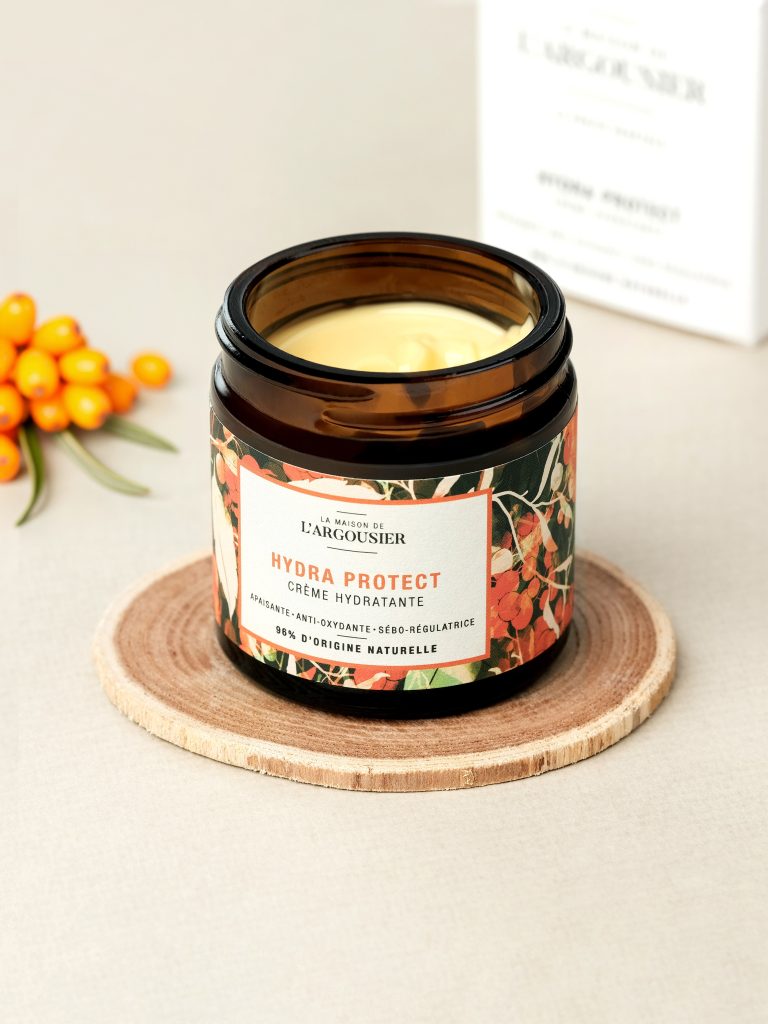
- Hydra Protect : if you’re looking for hydration, a matte finish, and protection without anti-wrinkle benefits. This moisturizer combines native water and sea buckthorn berry oil, anti-pollution wakame, and Hydranov PA red algae extract—three times more effective than hyaluronic acid at boosting skin hydration. Results: +47% reduction in shine and +40% increase in skin softness in 21 days (Eurofins test, 22 volunteers, all skin types including oily skin in the T-zone).
- Active Smoothing : if you also want to prevent skin aging. Same sebum-regulating base, plus a Botox-like active ingredient (Gatuline Expression) and an anti-pollution shield (Pollustop). A unique offering: this is a treatment for early wrinkles that’s suitable for oily skin without leaving a greasy film.
Choosing between Hydra Protect and Lissant Actif depends on your priorities. But choosing a moisturizer isn’t just about the brand: texture, active ingredients, and compatibility with your skin type—it all matters. To compare the key criteria and sort through the formulas on the market, check out our guide to the best facial moisturizers. You’ll know exactly what to look for on the label before you buy.
To enhance the results, complement your routine with La Rayonnante, a nutricosmetic supplement: organic sea buckthorn oil, coenzyme Q10, lutein, and vitamin E work from the inside to promote hydration, cell regeneration, and antioxidant protection. Take 3/4 of a dropperful daily, either directly into the mouth or mixed with food. The inside-out approach means addressing both aspects at the same time.
Evening routine for combination skin: the restorative ritual
By evening, combination skin has accumulated pollution, makeup, oxidized sebum, and mineral deposits left behind by tap water. Cleansing is even more important than it is in the morning.
Step 1: Deep cleanse after showering
Hard water disrupts the skin’s hydrolipidic film and can lead to breakouts in this skin type. After showering, apply Secret d’Éclat to a cotton pad and gently sweep it over your face, neck, and décolletage. Its powerful antibacterial action (native sea buckthorn water + malic acid) counteracts the effects of hard water, soothes sensitive areas, and prepares the skin for subsequent skincare steps. It’s your toner, antibacterial treatment, and radiance booster all in one step.
Step 2: Nourish and protect for the night
Apply a few drops of Secret Sublimant to the skin, patting gently. Sea buckthorn dry oil acts as a restorative shield overnight. Omega-7 nourishes dry cheeks. Omega-6 replenishes the hydrolipidic film. Beta-carotene (10 times more than in a carrot) and vitamin E (4 times more than in sunflower oil) combat oxidative stress accumulated throughout the day.
Step 3: Night Cream
Same choice as in the morning: Hydra Protect for a balance of hydration and matte finish, or Lissant Actif if you’re also targeting early signs of wrinkles. The cream locks in the oil’s active ingredients and provides extra comfort overnight. Skin that fluctuates between shine and tightness finally finds balance.
Ingredients that make a difference for combination skin after age 35
After age 35, the skin presents an additional challenge: signs of aging begin to appear, dehydration becomes more pronounced, yet the forehead and nose remain oily. How can you balance sebum control and protection without overburdening the skin?
Niacinamide (vitamin B3) is one of the most extensively studied active ingredients for regulating sebum production while improving skin texture. Hyaluronic acid hydrates without leaving a greasy feeling. Salicylic acid unclogs enlarged pores and helps remove dead skin cells. These are essential additions to a well-designed skincare routine.
But the active ingredient that most skincare routines overlook is omega-7. Sea buckthorn contains at least 20 times more omega-7 than the three other fruits known to contain it. Palmitoleic acid, the primary omega-7, is the natural substance most similar to the skin’s protective lipid barrier. It regulates lipid production without drying out the skin, nourishes without leaving a greasy residue, and has documented anti-inflammatory properties. It is precisely this “two-way” sebum-regulating action that makes sea buckthorn so well-suited for skin that is both oily and dry.
Plant-Based Oils and Combination Skin: Separating Fact from Fiction
Should you use plant-based oils on combination skin? Many people hesitate, fearing they’ll make their skin oilier or clog their pores. It’s a valid concern, but one based on a common misconception.
Not all oils are comedogenic. What matters is their fatty acid composition and their comedogenicity rating. Sea buckthorn oil, rich in omega-7 and omega-9, has a natural affinity with the skin’s lipid barrier: it absorbs quickly without clogging pores. La Maison de l’Argousier’s Secret Sublimant is formulated as a dry oil: silky texture, lightweight feel, zero greasy residue. It can be applied under moisturizer or as a hair mask. Which comedogenic ingredients should be avoided on combination skin? Coconut oil, wheat germ oil, and cocoa butter, which have a high comedogenicity index.
Combination skin or dehydrated oily skin: how can you tell the difference?
Dehydrated oily skin appears shiny all over the face, not just on the forehead and nose. It produces excess oil everywhere but lacks moisture. The pores are enlarged on the cheeks as well. The skin feels tight after cleansing, despite the shine.
Combination skin, on the other hand, shows a clear contrast between different areas: shine on the forehead, nose, and chin, with normal or dry cheeks. If you’re unsure, check your cheeks midday: if they feel matte and comfortable, you most likely have combination skin. If they’re shiny too, consider the possibility of dehydration. In both cases, a purifying toner and a sebum-regulating moisturizer remain essential allies.
If your cheeks feel tight while your T-zone is shiny, you’re definitely in combination skin territory. But if tightness is the dominant issue across your entire face, your skin may need a routine designed for dry skin, with emollient ingredients that are richer in fatty acids. The right diagnosis determines which products to choose.
Mistakes That Can Harm Your Combination Skin Routine
Even with the right products, certain habits can ruin everything:
- Over-cleansing: A foaming cleanser that’s too harsh strips away the skin’s natural protective barrier, causing the forehead and nose to produce even more oil. A vicious cycle is guaranteed.
- Skip the sunscreen: even in winter, UV rays accelerate skin aging and worsen post-inflammatory blemishes.
- Exfoliating too often: a gentle scrub once or twice a week is enough. Any more than that, and you’ll weaken your skin’s barrier.
- Applying a cream that’s too rich to your forehead and nose: lightweight textures or water-based formulas are much better suited for this skin type.
- Counteract the effects of hard water: after each time your skin comes into contact with tap water, use a toner or skin-care water to neutralize irritating residues.
Your combination skin routine at a glance
| Step | Morning | Evening |
|---|---|---|
| 1. Purify | Skin care toner (malic acid, antibacterial) | Post-shower skincare lotion (anti-limescale, antibacterial) |
| 2. Nourish / Regulate sebum production | Omega-7 dry oil (a few drops) | Omega-7 dry oil (a few drops) |
| 3. Cream | Hydra Protect or Active Smoothing, depending on your needs | Hydra Protect or Active Smoothing |
| 4. Bonus | La Rayonnante Nutricosmetics (In & Out) |
Combination skin doesn’t need ten products. It needs the right active ingredients, in the right order, morning and night. Sebum-regulating omega-7s, antibacterial native water, and a mattifying moisturizer formulated with sea buckthorn water and oil: these are the building blocks of a routine that cares for every part of your skin. Your skin no longer has to choose between comfort and a matte finish.
The information provided is for informational purposes only and does not constitute medical advice. Consult your doctor or pharmacist.
Sources and references
Eurofins EVIC France clinical trial, study STUVY22AA0553-1 (2022), 14-day protocol involving 20 volunteers, Secret Sublimant Dry Oil (Ref. HSMA6): more supple and smoother skin (95%), more hydrated, toned, and firmer skin (91%).
Eurofins EVIC France clinical trial, Study STUVY23AA0273-1 (March–April 2023), 21-day protocol on 22 volunteers, Hydra Protect moisturizing cream (Ref. CHMA3): significant reduction in dullness (+47%), improved skin softness (+40%), plumper skin.
Eurofins EVIC France clinical trial, Study STUVY22AA0555-1 (2022), 14-day protocol on 20 volunteers, Secret d’Éclat skincare water (Ref. EDSMA15): smoother, soothed, and purified skin (100%), revitalizing effect (+41%), refreshing effect (+37%).
Luetjohann, S. (2002). Sea Buckthorn: An Energy-Packed Fruit and Beneficial Oil.


 Free shipping when you buy 2 or more items!