



How does a moisturizing body oil work on the skin?
A quick refresher on skin biology, because understanding how it works makes all the difference. A plant-based oil does not add water to the skin. It works indirectly: by forming a protective lipid film on the epidermis, it prevents the water already present from evaporating. This is known as transepidermal water loss. This protective film also strengthens the skin barrier—the surface layer exposed to cold, wind, pollution, and air conditioning. Plant oils rich in essential fatty acids, particularly omegas 3, 6, and 9, help restore this barrier. The result: the skin retains moisture better and regains suppleness and comfort. In practical terms, a moisturizing body oil is particularly valuable for dry or dehydrated skin that feels tight after showering. But be careful: dry skin and dehydrated skin are not the same thing. Dry skin feels tight all the time, may flake, and appear rough. Dehydrated skin, on the other hand, feels tight only occasionally—often after cleansing or in the winter—and shows fine dehydration lines.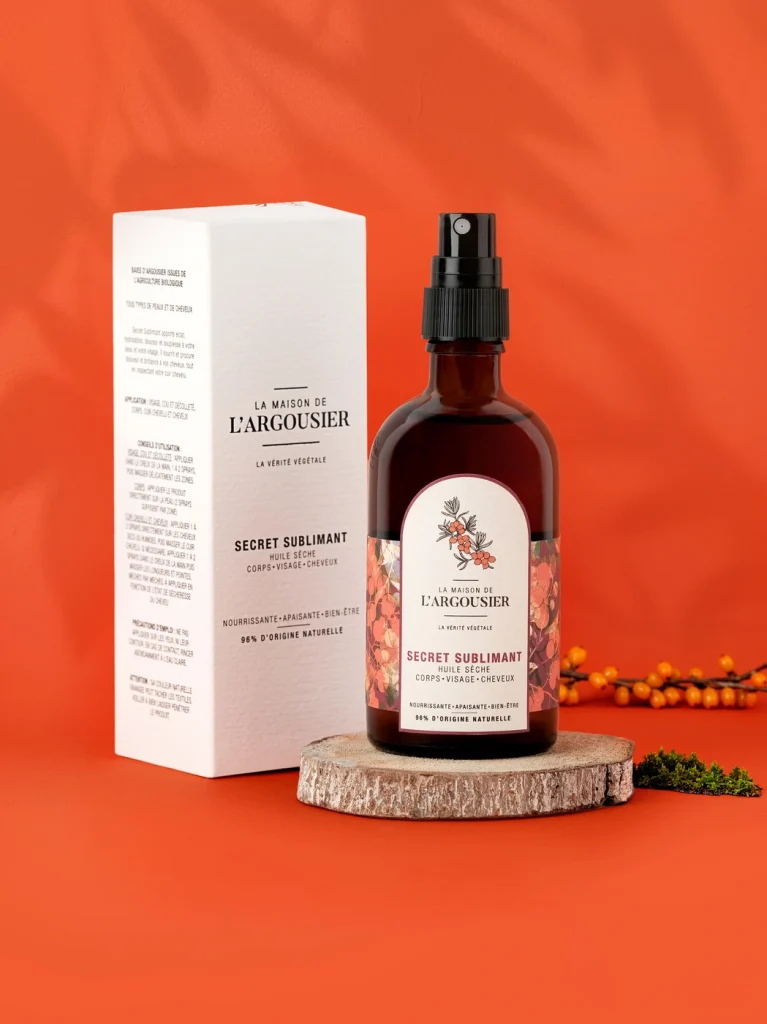
Dry oil or traditional oil: what’s the difference for the body?
If your skin feels tight all the time even after applying oil, it may need an extra boost. An oil strengthens the lipid barrier, but a cream formulated for dry skin combines emollients, humectants, and occlusives to address all aspects of dryness. Combining the two helps nourish the skin barrier while capturing and retaining moisture in the epidermis.
This is a valid question that many women ask themselves. A traditional oil leaves a noticeable film on the skin. It’s ideal for massage or for very dry skin that needs a generous dose of lipids, such as argan oil, for example. Dry oil, on the other hand, has a light, almost liquid texture that absorbs quickly without leaving a greasy or sticky feeling. It’s the perfect daily skincare product for those who want to nourish their skin without having to wait 20 minutes before getting dressed. A clinical test conducted by Eurofins (study STUVY22AA0553-1, panel of 20 people, 14 days) on Maison de l’Argousier’s Secret Sublimant dry oil showed that 95% of users found application easy, smooth, and even. And 90% noticed softer, more supple, and better-hydrated skin after just two weeks. What makes this dry oil particularly appealing: it’s suitable for all skin types, including sensitive skin. The same clinical test was conducted on a panel where 65% had sensitive or reactive skin, confirming very good skin tolerance.Plant-based oils: Which ones actually penetrate the skin?
Not all oils behave the same way when they come into contact with the skin. Here’s a quick comparison of the most common ones:- Sweet almond oil: light texture, rich in vitamin E and monounsaturated fatty acids. Absorbs easily and gently moisturizes. Well-tolerated by sensitive skin.
- Argan oil: rich in vitamin E and antioxidants, with a light yet nourishing texture. It has soothing properties and absorbs well.
- Coconut oil: rich in vitamins A and E, and very nourishing. Be careful, though: it can be comedogenic on the face and tends to sit on the surface of the skin on the body.
- Sea buckthorn oil: it’s a hidden gem. Naturally rich in omega-3, 6, 7, and 9 fatty acids, beta-carotene (10 times more than a carrot), and vitamin E (4 times more than sunflower oil). Omega-7s, which are extremely rare in the plant kingdom, play a key role in skin nutrition and regeneration.
How do you interpret the INCI list of ingredients for a body oil?
The INCI (International Nomenclature of Cosmetic Ingredients) list is your ally. It lists ingredients in descending order of concentration. In other words, the ingredient at the top of the list is the one that makes up the majority of your product. Here are a few tips to help you avoid being misled:- If the first ingredients listed are Paraffinum Liquidum, Mineral Oil, or Isohexadecane, you’re dealing with a petroleum-derived mineral oil. It forms an occlusive film but does not nourish the skin.
- Silicones (dimethicone, cyclomethicone) give the skin a silky feel but provide no nourishing benefits.
- Look up the Latin names for these plant oils: Hippophae Rhamnoides Oil (sea buckthorn), Prunus Amygdalus Dulcis Oil (sweet almond), Simmondsia Chinensis Seed Oil (jojoba).
- Be wary of synthetic fragrances listed under the generic terms "Parfum " or " Fragrance," especially if you have sensitive skin. Opt for products with natural fragrances or those that are fragrance-free.
Sea buckthorn oil: why omega-7 fatty acids are a game-changer
Of the approximately 450,000 plant species identified, only four fruits in the world contain significant amounts of omega-7 fatty acids. Sea buckthorn surpasses them all, with a concentration at least 20 times higher than that of its few competitors. These omega-7 fatty acids (palmitoleic acid) are naturally present in human sebum. They contribute to the regeneration of mucous membranes and the epidermis, and possess remarkable sebum-regulating properties. In practical terms, this means that an oil rich in omega-7 deeply nourishes the skin without leaving it greasy. It regulates sebum production in both directions: it curbs excess sebum on oily skin and compensates for deficiency on dry skin. The Eurofins clinical test conducted on Secret Sublimant confirms these properties: a statistically significant increase in hydration, softness, and suppleness of the skin on the body after 14 days of use. Feelings of tightness were reduced in 95% of testers, and 85% noted a brighter, more radiant complexion.Beauty Routine: How to Maximize the Benefits of Your Body Oil
These sebum-regulating properties aren’t just beneficial for the body. When applied to the face, sea buckthorn oil gives the skin a visible glow thanks to its carotenoids, without leaving it feeling heavy. If you’re looking to incorporate sea buckthorn oil into your skincare routine, just a few drops in the morning or at night are enough to nourish the skin and strengthen its hydrolipidic film.
The effectiveness of a moisturizing body oil depends as much on the product itself as on how it is applied. Here is the best routine:- Exfoliate beforehand (1 to 2 times a week): using circular motions, starting at the feet and working your way up toward the chest. Allow 5 to 10 minutes. Once dead skin cells are removed, the skin absorbs active ingredients much more effectively.
- Apply to slightly damp skin: after getting out of the shower, don’t dry yourself completely. The remaining moisture creates a microemulsion with the oil, which helps it absorb. For a dry oil, applying it to dry skin also works very well.
- Upward strokes: start at the ankles and work your way up toward the thighs and hips. This massage stimulates microcirculation and enhances absorption.
- Don’t forget the often-overlooked areas: elbows, knees, and feet. These are the first to suffer from dry skin.
Oil alone isn’t always enough, especially if your skin feels tight as soon as you wake up. Dry to very dry skin requires a more comprehensive regimen: a gentle cleanser, a hydrating serum, a nourishing oil, and then an occlusive cream. If you’re looking to establish a consistent morning and evening routine, check out our complete beauty routine for dry skin, which breaks down each step to help restore long-lasting comfort to your skin.
Bonus tip: Secret Sublimant can also be used as a hair treatment (as a pre-shampoo mask) and on the face, either on its own or under a moisturizer. It’s a true 3-in-1 treatment for the body, face, and hair—perfect for those who want to simplify their beauty routine without compromising on effectiveness.Pregnancy, Atopic Skin, and Stretch Marks: What You Need to Know
During pregnancy and breastfeeding, it’s important to be mindful of the ingredients in beauty products. Oils containing essential oils should be avoided, as some can cross the placental barrier or pass into breast milk. Endocrine disruptors, which are common in conventional cosmetics, should also be avoided. For atopic or very dry skin, dermatologists recommend pure plant oils rich in essential fatty acids and vitamin E, free of synthetic fragrances and alcohol. Sweet almond oil, jojoba oil, and sea buckthorn oil are top choices. Squalane, naturally present in human skin and included in the Secret Sublimant formula, soothes, nourishes, and improves the integrity of the skin barrier. As for stretch marks: no oil can make them disappear. However, plant oils rich in vitamin E and essential fatty acids can help maintain skin elasticity and reduce their appearance, especially as a preventive measure when the skin is subjected to rapid stretching.Organic or conventional oil: Does certification really make a difference?
An organic label on a cosmetic product guarantees compliance with specific standards: a minimum percentage of naturally derived ingredients, the absence of certain petrochemical compounds, and the use of gentle extraction processes. This does not automatically guarantee better skin tolerance, but it significantly reduces the risk of finding undesirable ingredients in the product. What matters more than the label is traceability. Where does the raw material come from? How is it extracted? Extraction using chemical solvents or heat alters fatty acids and degrades vitamins. Enzymatic extraction, which uses neither solvents nor heat, preserves all the active ingredients. This is the process used by Maison de l’Argousier to produce its sea buckthorn oil from berries grown on 26 hectares certified organic.Shelf Life: How Long Can You Keep Natural Body Oil?
A pure vegetable oil, free of synthetic preservatives, is more delicate than a conventional product loaded with parabens. A few simple rules can help extend its shelf life:- Store it away from light and heat. A tinted glass bottle (amber or opaque) is ideal.
- Be sure to close the bottle tightly after each use to minimize oxidation.
- The presence of vitamin E in the formulation acts as a natural antioxidant and stabilizes the oil.
- Generally, a well-formulated natural oil will last 6 to 12 months after opening.
FAQ
What is the best oil for moisturizing the body?
Plant oils rich in essential fatty acids (omegas 3, 6, 7, and 9) and vitamin E are the most effective at moisturizing the body. Sea buckthorn oil stands out for its exceptionally high concentration of omega-7, a rare sebum-regulating fatty acid that nourishes the skin without leaving it greasy. Sweet almond oil and jojoba oil also have beneficial properties.What is the best natural body moisturizer?
A dry plant-based oil is an excellent natural moisturizer for the body. It combines nourishment and comfort without leaving a greasy film. When applied to damp skin after a shower, it creates an emulsion that promotes absorption and locks moisture into the skin. For a natural glow, opt for formulas containing carotenoids (such as sea buckthorn oil), which give your skin a visible healthy glow.Is it safe to use body oil during pregnancy?
Yes, provided you choose a vegetable oil that contains no essential oils, no synthetic fragrances, and no endocrine disruptors. Pure vegetable oils (such as sweet almond, jojoba, and sea buckthorn) are well tolerated. Check the INCI list and opt for products with short ingredient lists that contain naturally derived ingredients. If in doubt, consult your doctor or midwife.What oil is best for acne-prone skin?
People with acne-prone skin should avoid comedogenic oils such as coconut oil. Sea buckthorn oil, thanks to its sebum-regulating omega-7 fatty acids, nourishes without leaving a greasy residue and helps rebalance oily skin. Choose non-comedogenic formulas that are free of irritating essential oils. The information provided is for informational purposes only and does not constitute medical advice. Consult your doctor or pharmacist.Sources and references
- Eurofins EVIC France, Study STUVY22AA0553-1 / VY-MAT-HV7M-22-262-0439, “In-use test with clinical scoring on HSMA6 Dry Oil,” November 2022. Preliminary results from a panel of 20 people, 14 days of use.
- Product data and formulation: La Maison de l’Argousier, Secret Sublimant press release (2024) and Cosmalia ingredient and claim sheets.


 Free shipping when you buy 2 or more items!