


Fifteen times more vitamin C than an orange, ten times more beta-carotene than a carrot, and one of the few fruits in the world to contain omega-7 fatty acids: sea buckthorn truly lives up to its reputation as a botanical gem. Behind these staggering figures lies a modest-looking, thorny shrub, rooted in medicinal traditions for over a millennium. Let’s get to know it.
Hippophae rhamnoides: A Botanical Profile of the Sea Buckthorn
The sea buckthorn, scientifically known asHippophae rhamnoides, belongs to the Elaeagnaceae family. It is a dioecious shrub (meaning there are male and female plants) that typically grows to between 1 and 5 meters in height, although some specimens reach 10 meters in wind-sheltered dune slacks. Its twigs are covered with silvery hairs and end in sharp thorns.
The leaves of the sea buckthorn, narrow and lanceolate (2 to 8 cm), are dull green on top and silvery gray underneath. As for the flowers, which are tiny and greenish, they appear as early as April, even before the leaves. Pollination depends mainly on the wind, since flowering occurs when pollinating insects are still scarce. A female sea buckthorn can be recognized by its small, rounded buds, while males have conical, upright buds.
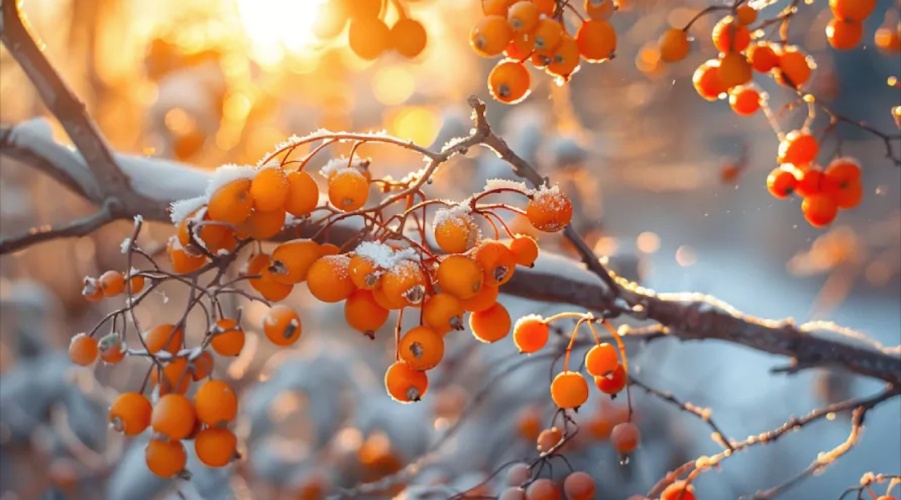
The fruits, known as argouses, are small, oval-shaped false drupes that turn bright yellow to orange when ripe (in September). What do they taste like? A surprising blend of pineapple, passion fruit, and lemon. Tart, invigorating, and quite unforgettable.
Sea buckthorn and arbutus: two very different plants
The phonetic similarity between sea buckthorn (Hippophae rhamnoides) and strawberry tree (Arbutus unedo) is a classic pitfall. Yet these two plants have nothing in common. The strawberry tree is a small evergreen tree in the heath family (Ericaceae), whose red fruits resemble strawberries. Sea buckthorn, on the other hand, is a thorny deciduous shrub with silvery leaves, bearing orange berries in tight clusters along its branches.
When it comes to composition, the difference is just as clear. Sea buckthorn berries contain levels of vitamin C and fatty acids (including palmitoleic acid) that are unmatched in the plant kingdom. Just remember: strawberry tree = small red strawberries, sea buckthorn = small orange berries packed with nutrients. The confusion is common, but now you won’t be fooled anymore!
A pioneer species that adapts to almost any soil
Sea buckthorn is a pioneer species in the ecological sense of the term. It colonizes poor, sandy, or calcareous soils, fixes atmospheric nitrogen through specialized bacteria (of the genusFrankia) living in its roots, and enriches the soil for the plants that will follow. In England, nitrogen fixation rates of 179 kg/ha have been measured in certain coastal plantations.
Its hardiness is remarkable. This species can withstand temperatures as low as -40 °C in certain varieties, such as Frugana. It tolerates drought, wind, sea spray, air pollution, and saline soil. The shrub thrives equally well in clay, rocky, or sandy soil.
Nutritional Profile: What Sea Buckthorn Berries Have to Offer
This is where sea buckthorn takes on a whole new dimension. An analysis conducted by the University of Orléans (using high-field NMR spectroscopy) identified the following inHippophae rhamnoidesberries:
- Organic acids: malic acid and quinic acid in high concentrations
- Vitamins: ascorbic acid (vitamin C), α-tocopherol (vitamin E), retinol (vitamin A)
- Saturated and unsaturated fatty acids, including palmitoleic acid (omega-7)
- Carotenoids(including beta-carotene, which gives them their bright orange color)
- Phenolic compounds: flavonoids, phenolic acids, glycosides
- Sugars and derivatives: glucose, L-quebrachitol
To give a meaningful comparison: the vitamin E content of sea buckthorn oil is 330.4 mg per 100 g, which is four times that of sunflower oil. The simultaneous presence of omega-3, 6, and 9 fatty acids, polyphenols, and natural hyaluronic acid in the berries creates a nutrient-rich blend rarely found in a single fruit. This explains why this berry is of such interest to both the health and beauty industries.
Omega-7: Sea Buckthorn’s Rare Asset
Only four fruits in the world contain omega-7 (palmitoleic acid). Sea buckthorn has a concentration at least 20 times higher than the other three. Why is this fatty acid so sought after? Because palmitoleic acid is the natural compound most similar to human sebum.
Specifically, this rare omega fatty acid helps regenerate mucous membranes and maintain the skin’s hydrolipidic film. Research confirms the benefits of sea buckthorn oil for protecting and regenerating the skin and mucous membranes, as Dr. A. Vernet (Weleda Laboratories) points out in an article published in*Phytothérapie*in 2006: “Folk wisdom and contemporary research confirm the benefits of sea buckthorn oil in protecting and regenerating the skin and mucous membranes.”
The Benefits of Sea Buckthorn for Skin and Health
Sea buckthorn oil has antibacterial and anti-inflammatory properties that are well-documented in the scientific literature. The quality of its benefits depends on the careful selection of the variety and the extraction method used. Its fatty acid and antioxidant profile makes it an excellent choice for:
- The skin: hydration, relief from skin discomfort (dryness, irritation), protection against oxidative stress, support for cell regeneration
- Mucous membranes: oral, digestive, and intimate comfort
- Overall health and immunity: thanks to its exceptionally high concentration of vitamin C and beta-carotene
- Hair and Nails: Nutrition, Radiance, and Vitality. The use of sea buckthorn for hair has been documented since ancient Greece, where farmers fed sea buckthorn leaves to their horses to make their coats shiny
Thomas Michel’s dissertation (University of Orléans / ICOA, 2011) demonstrated the antioxidant and antimicrobial potential of various parts of the sea buckthorn plant, which is linked to the presence of flavonoids and proanthocyanidins. His research identified 3 phenolic acids and 20 flavonol derivatives in the berries, extracted using an innovative solvent-free, microwave-assisted method.
As a dietary supplement, sea buckthorn oil is taken orally (using a dropper or spray). For topical use, it is available as a dry oil, cream, or facial treatment. The two methods are complementary and are not mutually exclusive.
Sea buckthorn in cosmetics: why water and oil make all the difference
Sea buckthorn berries contain two distinct treasures: a natural juice rich in vitamin C and malic acid, and a vegetable oil concentrated in omega-7 fatty acids, vitamin E, and beta-carotene. Using one without the other means missing out on part of this plant’s potential.
This is precisely what makes the “totum” approach so effective: combining the water and oil from the berry in a single product, using biomimicry, to recreate the fruit’s natural richness. The characteristic orange color of organic sea buckthorn products is due to beta-carotene, an antioxidant pigment that instantly gives the face a healthy glow. For hair as well, this water-oil synergy provides nourishment and shine without weighing down the hair shaft.
Furthermore, a study published in the journal*Fruits*(Górnaś et al., 2016) showed that sea buckthorn-based beverages exhibit a significant correlation (r = 0.968) between their tocopherol (vitamin E) content and their antioxidant activity. In other words: the higher the product’s content of sea buckthorn vitamin E, the more effectively it protects against free radicals.
Precautions and Contraindications
Sea buckthorn is generally very well tolerated. However, there are a few precautions worth noting. People taking blood thinners should consult their doctor before taking oral supplements, as omega fatty acids can affect blood flow. If you are pregnant or breastfeeding, it is advisable to seek medical advice, as no specific studies have been conducted to date.
When applied to the skin, sea buckthorn oil rarely causes irritation, but it is always recommended to test it on a small area of skin first if you have sensitive skin. The information provided here is for informational purposes only and does not constitute medical advice. Consult your doctor or pharmacist.
How to Identify a High-Quality Sea Buckthorn Product
Not all sea buckthorn products are created equal. Here are a few selection criteria to keep in mind:
- The origin of the berries: a certified organic farm guarantees that no pesticides are used. The nature of the soil directly influences the berries’ active ingredient content
- Choosing the right variety: Some varieties, such as Clara, contain higher levels of active ingredients than others (Leikora, Friesdorfer Orange, etc.)
- The extraction process: an enzymatic extraction method, which uses no solvents or heat, preserves the integrity of vitamins and fatty acids, unlike chemical solvent extraction
- Traceability: from the field to the finished product, every step counts. The time between harvest and processing directly affects the vitamin C content, which is extremely sensitive to heat and oxidation
A high-quality product can also be recognized by its color. Authentic sea buckthorn oil is naturally orange (beta-carotene). A clear or very light-colored oil may indicate that it has been diluted or only partially extracted.
A thousand-year-old legacy, a plant with a bright future
Sea buckthorn is not just a passing fad. Traditional Tibetan medicine lists some 84 sea buckthorn berry-based prescriptions in therGyud-bZhi(Four Medical Tantras). Chinese, Japanese, and Ayurvedic medicine have incorporated it for centuries to promote health and well-being. Chinese Olympic teams have taken sea buckthorn preparations with them as an authorized natural stimulant. And Russian cosmonauts have used it on space missions for its regenerative properties.
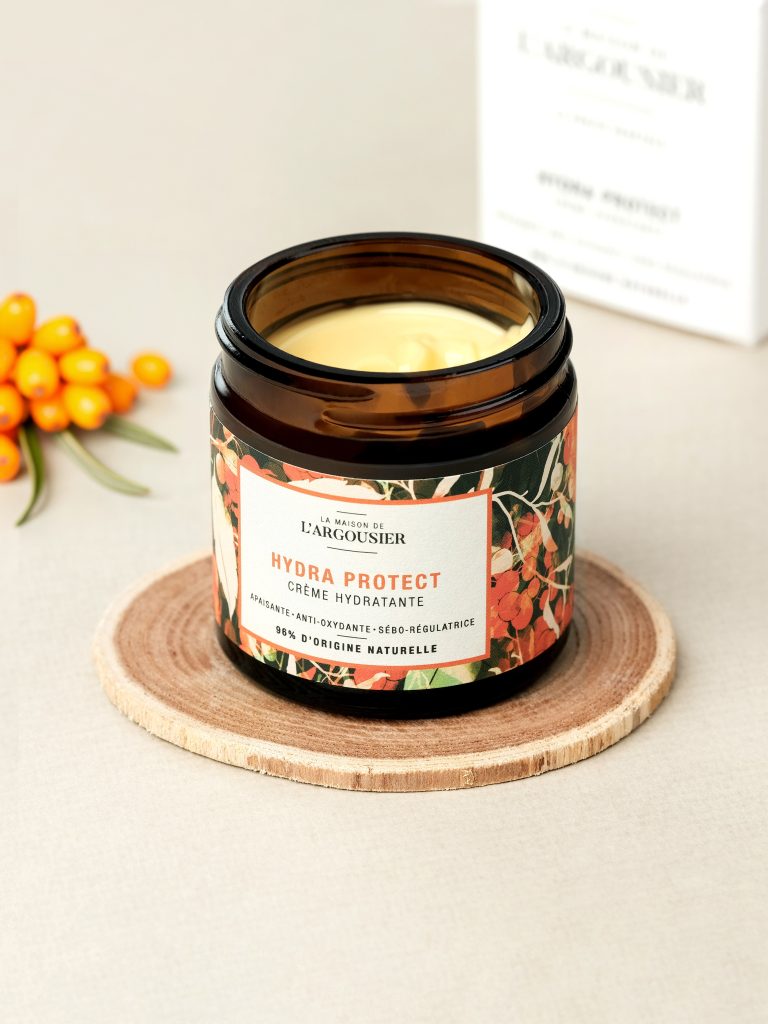
In France, this fascinating plant is making a comeback. In the Southern Alps, producers are turning the berries into jams, syrups, and juices. In coastal Picardy, sea buckthorn grows in abundance along the shoreline. And family-owned businesses like Maison de l’Argousier, which owns 26 hectares of organic plantations, are developing cosmetics and dietary supplements that harness the synergy between the native water and the oil from the berries. Sea buckthorn clearly adapts to all terrains, including that of cosmetic innovation.
Whether you’re looking to nourish your skin, support your daily health, care for your hair, or simply discover a plant with extraordinary benefits, sea buckthorn deserves a place in your daily routine. Nature, sometimes, really does get it right.
Sources and references
- Vernet, A. “Sea Buckthorn (Hippophae rhamnoidesL.)”.Phytotherapy, vol. 4, pp. 125–129, 2006.Link to the article
- Michel, T. “New Methods for Extraction, Fractionation, and Identification: Application to Bioactive Compounds from Sea Buckthorn (Hippophaë rhamnoides).” Ph.D. dissertation, University of Orléans, ICOA, 2011.Link to the dissertation
- Górnaś, P., Mišina, I., Krasnova, I., Segliņa, D. “Tocopherol and tocotrienol contents in sea buckthorn berry beverages in the Baltic countries: Impact of the cultivar.”Fruits, vol. 71(6), pp. 399–405, 2016.Link to the article
- Report: “Chemical Profile of Sea Buckthorn Berries Using NMR Spectroscopy,” University of Orléans (internal data).


 Free shipping when you buy 2 or more items!