



Liquid oil, capsules, softgels, juice: the sea buckthorn supplement aisle is like a maze. Are you the type to turn the label over, check the omega-7 content, and compare three tabs before clicking? Perfect. Here’s a comprehensive guide to help you make the right choice without compromising on quality.
Both formats are valid. The choice depends on your priorities: maximum effectiveness with liquid oil, or convenience with capsules. In either case, check the omega-7 content and the extraction method.
The various forms of sea buckthorn as a dietary supplement
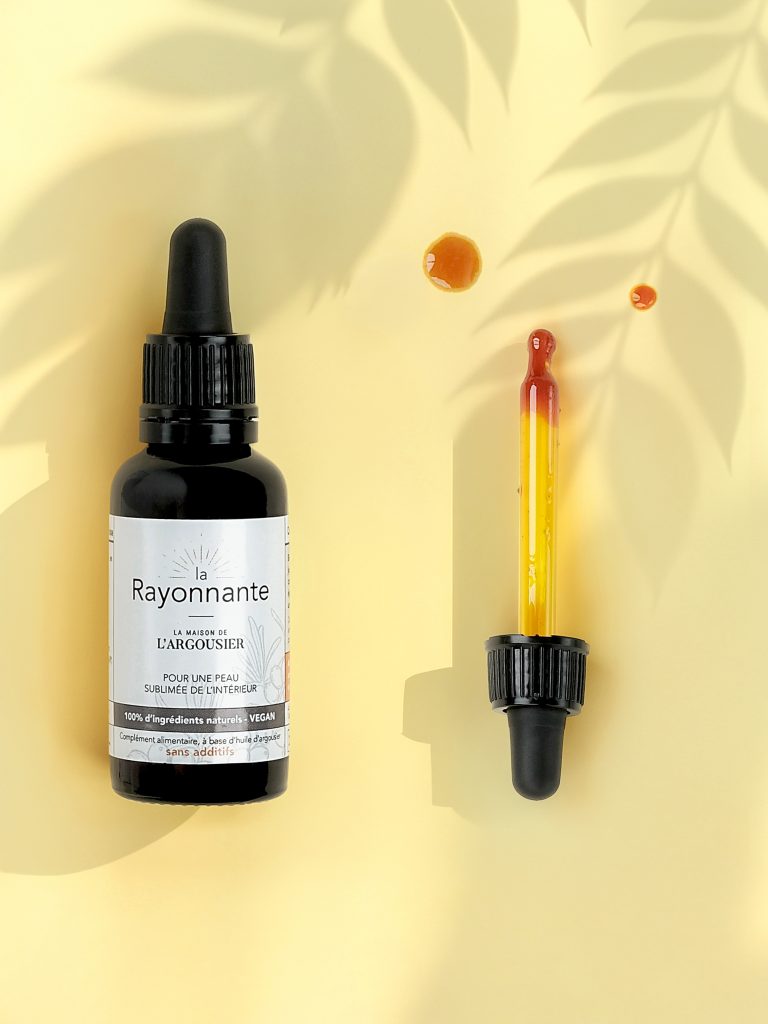
Sea buckthorn (Hippophae rhamnoides) is available in several forms on the dietary supplement market. Each form has its own advantages and limitations, which you should be aware of before making a purchase.- Liquid oil (spray or dropper): This is the most direct form. Sea buckthorn berry oil retains its full lipid profile: omega-7, omega-3, omega-6, omega-9, vitamin E, and beta-carotene. The bioavailability of the fatty acids is optimal because they undergo no processing related to encapsulation.
- Vegetable capsules and softgels: a convenient, tasteless, and portable format. Quality varies significantly by supplier. Some capsules contain sea buckthorn oil standardized to 30% omega-7, while others have much lower concentrations. Always check the actual palmitoleic acid content.
- Sea buckthorn juice and syrup: rich in vitamin C (up to 450 mg per 100 g of fruit), they are beneficial for the immune system. However, they contain very few fatty acids and therefore very little omega-7. The syrup contains added sugar: it is not recommended for people with diabetes.
- Powder: obtained by drying and pulverizing the whole berry, it retains some of the active ingredients but loses a portion of the heat-sensitive lipid compounds.
Why organic sea buckthorn oil is better than other forms
The sea buckthorn berry is a remarkable powerhouse: it contains four families of omega fatty acids (3, 6, 7, and 9), 10 times more beta-carotene than a carrot, and 4 times more vitamin E than sunflower oil. However, the dietary supplement must be formulated in a way that preserves these nutrients. The oil, in liquid form, preserves the lipid fraction of the berry intact. Omega-7s (palmitoleic acid), fatty acids so rare in the plant kingdom, are monounsaturated acids that can be directly absorbed by the body. According to Vernet (2006), in the journal Herbal Medicine, both traditional wisdom and modern research confirm the benefits of sea buckthorn oil for protecting and regenerating the skin and mucous membranes (Springer). When this same oil is encapsulated in softgels or capsules, it retains its properties, but the coating (whether gelatin or modified starch) adds additional steps to the dissolution process within the body. Bioavailability is not zero—far from it—but the liquid form offers faster and more complete absorption.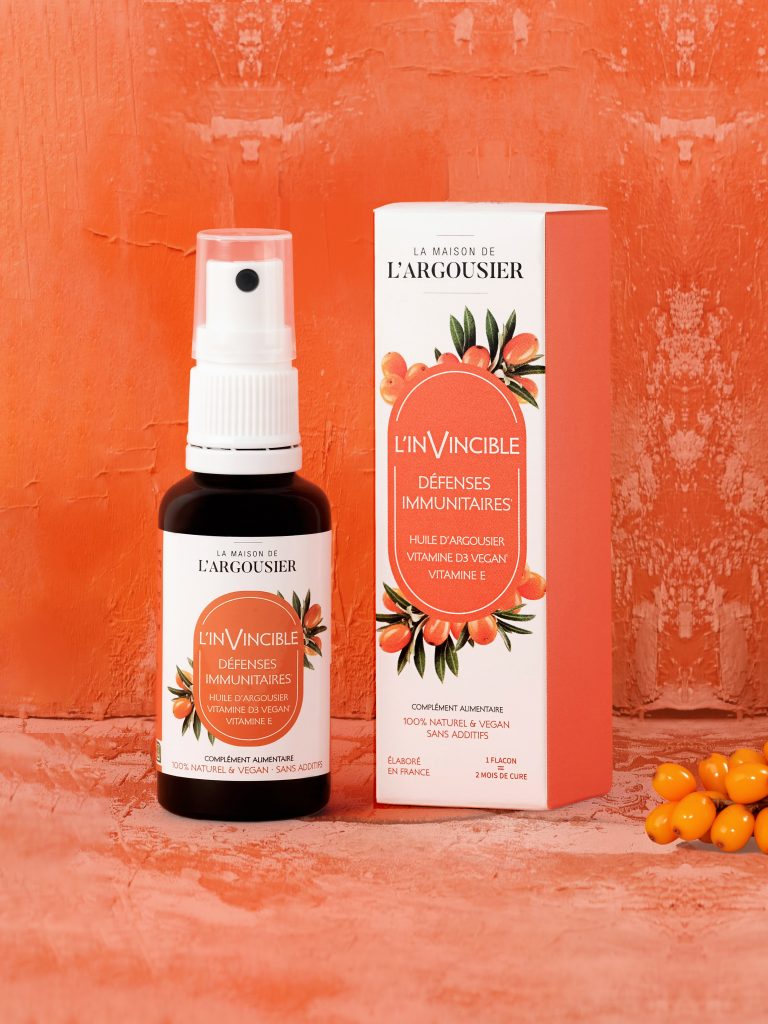
Enzymatic extraction, supercritical CO2, or cold pressing: how do you know which one to choose?
The extraction method directly determines the quality of the active ingredients in your supplement. Three methods dominate the market:- Solvent-free enzymatic extraction: This process separates the natural water and vegetable oil from sea buckthorn berries without heat or chemicals. This process, which is certified organic and COSMOS, preserves all the fatty acids, fat-soluble vitamins, and antioxidants. This is the method chosen by Maison de l’Argousier for its formulas.
- Supercritical CO2 extraction: This process operates at low temperatures and eliminates any risk of oxidation. It ensures the purity of the oil and a very low oxidation level (TOTOX). Some capsule manufacturers use this process.
- Cold pressing: a traditional method that works well, but the yield remains limited, and certain sensitive compounds may be altered by mechanical pressure.
Sea Buckthorn Omega-7: Why the Form Matters Just as Much as the Dosage
Omega-7 (palmitoleic acid) is a natural component of human sebum. It is an extremely rare fatty acid in the plant kingdom: only four fruits in the world contain it, and sea buckthorn contains at least 20 times more than other plant sources, such as macadamia nuts. This omega-7 plays a central role in maintaining the comfort of mucous membranes (oral, ocular, vaginal), protecting the skin, and supporting the skin’s lipid barrier. For the body to fully benefit from it, palmitoleic acid must be accompanied by its natural lipid environment: vitamin E, beta-carotene, and omega-9. A formula that isolates omega-7 through chemical purification loses this synergy. A dietary supplement combining the full-spectrum oil of organic sea buckthorn berries, with its four families of omega fatty acids and vitamins, offers greater efficacy than a standardized extract. This is the principle of the plant totum.Capsules or liquid oil: a comparison for your daily routine
| Criterion | Liquid oil (spray/dropper) | Vegetarian capsules |
|---|---|---|
| Bioavailability of omega-7 | Optimal (direct absorption) | Good (must be dissolved first) |
| Practicality | Fast-acting sublingual spray | Easy to carry, tasteless |
| Complete lipid profile | Whole (flesh + seeds) | Varies by manufacturer |
| Additives | None if short formula | Coating (starch, glycerin) |
| Preservation | 3 months after opening, stored away from light | Longer (protective cap) |
Dry mucous membranes and skin benefits: what the studies say
One of the most common comments from users concerns mucosal comfort, particularly during menopause. The omega-7 fatty acids in sea buckthorn help maintain tissue hydration and elasticity. Palmitoleic acid, a key component of sebum, supports cell regeneration and skin tissue repair. Goetz and Le Jeune (2010), in the journal Herbal Medicine, have identified numerous pharmacological studies confirming the protective effects of sea buckthorn oil on the skin and mucous membranes, including research on atopic dermatitis (Yang et al., 2000) and tissue healing (Springer). For dry skin and mucous membranes, sea buckthorn offers a much more complete lipid profile than borage oil or evening primrose oil, which do not contain omega-7. These two oils primarily provide omega-6 (gamma-linolenic acid), which is beneficial but less specific for mucous membranes.How to check the quality of a sea buckthorn supplement
Given the overwhelming number of options available, here are the criteria to look for on the label:- Source of sea buckthorn: organic, traceable, identified variety. The Clara variety is recognized as one of the richest in active ingredients.
- Extraction method: enzymatic or supercritical CO2. Avoid products labeled “solvent” or those with no information at all.
- Omega-7 content: A reputable supplement lists the exact amount of palmitoleic acid per serving.
- Short formula: the fewer the ingredients, the more transparent the formula. L’Invincible by Maison de l’Argousier contains only 3 ingredients: 96% organic sea buckthorn oil, plant-based vitamin D3 derived from lichen, and vitamin E.
- Clean Label: no unnecessary additives, no artificial colors, no added sugar.
- Made in France: a guarantee of regulatory compliance.
Precautions and Contraindications for Sea Buckthorn
Sea buckthorn oil is well tolerated by most users. However, there are a few precautions you should keep in mind:- This supplement is not recommended for people taking anticoagulants (warfarin) or antiplatelet agents.
- Not recommended for pregnant or breastfeeding women, unless otherwise advised by a doctor.
- Avoid combining it with other supplements rich in vitamin C (acerola, camu-camu) to prevent overloading the body.
- Contraindicated in cases of hemochromatosis or iron-related disorders.
- If consumed in excess, mild digestive problems (such as nausea or bloating) may occur.
How long before I see results?
Sea buckthorn berries don’t deliver their benefits overnight. In practice, many women report improved skin and mucous membrane comfort after 3 to 4 weeks of daily use. For more noticeable results regarding dryness or skin quality, allow one to two months of regular use. Consistency is more important than dosage. It’s better to take a moderate dose every day than to do an intensive regimen for just a few days. A healthy lifestyle and a varied, balanced diet remain the essential foundation. Dietary supplements support the body—they don’t replace it.Sea Buckthorn as a Supplement: A Summary to Help You Make the Right Choice
Sea buckthorn oil in liquid form (spray or dropper) remains the best supplement option for reaping the full benefits of the omega-7 fatty acids, vitamins, and antioxidants found in Hippophae rhamnoides berries. Vegetable capsules are a solid alternative if the extraction process preserves the active ingredients. Sea buckthorn juice provides vitamin C but lacks essential fatty acids. Regardless of the format, look for a simple formula, certified organic sea buckthorn, a gentle extraction process, and transparent omega-7 dosage information. Your body deserves this level of care. And if you’re looking for a Clean Label formula—100% natural, made in France from berries grown on certified organic farms—check out L’Invincible or La Rayonnante: they tick all the boxes.Sources and references
Sea buckthorn is just one piece of the puzzle. A diet rich in essential fatty acids, probiotics, and aloe vera: several natural approaches work together to relieve vaginal dryness. For a comprehensive overview, check out our guide to natural sea buckthorn remedies and other available solutions.
- Vernet, A. “Sea Buckthorn (Hippophae rhamnoides L.).” Phytothérapie, 4, 125–129, 2006. Springer link
- Michel, T. “New Methods for Extraction, Fractionation, and Identification: Application to Bioactive Compounds from Sea Buckthorn (Hippophae rhamnoides).” Ph.D. dissertation, University of Orléans, 2011. HAL link
- Goetz, P. & Le Jeune, R. “Hippophae rhamnoides L., sea buckthorn oil, berry oil, seed oil.” Phytothérapie, 8, 118–123, 2010. Springer link


 Free shipping when you buy 2 or more items!