



Vous avez 50 ans, peut-être un peu moins, peut-être un peu plus, et votre organisme décide de réécrire les règles du jeu. Littéralement. La ménopause concerne chaque année plus de 400 000 personnes en France, et 87 % d’entre elles ressentent au moins un symptôme selon l’INSERM. Autant dire que vous n’êtes pas seule. Et non, bien vivre cette transition n’est pas une chimère réservée aux magazines. C’est une question de bons réflexes, de connaissances solides et d’alliés naturels bien choisis.
Les symptômes de la ménopause : à quoi s’attendre vraiment ?
La ménopause se définit par l’arrêt définitif des menstruations, confirmé après 12 mois consécutifs sans règles. Elle résulte de la diminution naturelle des œstrogènes et de la progestérone, liée à l’épuisement de la réserve folliculaire. En France, elle survient en moyenne entre 45 et 55 ans.
Les symptômes les plus fréquents ? Les bouffées de chaleur et sueurs nocturnes arrivent en tête, suivies des perturbations du sommeil, des sautes d’humeur, de la sécheresse cutanée et vaginale. Ajoutez parfois des douleurs articulaires, une sensibilité mammaire accrue ou des migraines. Le tableau peut sembler sévère, mais rassurez-vous : seules 20 à 25 % seulement des femmes ménopausées font face à des désagréments qui perturbent réellement leur quotidien (INSERM). Et surtout, ces symptômes ne sont pas une fatalité.
La durée varie considérablement d’une personne à l’autre. Certains symptômes peuvent persister plus de 10 ans, d’autres s’atténuent en quelques mois. L’organisme finit par s’adapter aux évolutions hormonales. Mais autant l’aider un peu, non ?
Activité physique : votre meilleur rempart contre les effets de la ménopause
Si un seul conseil devait être retenu pour bien vivre cette période, ce serait celui-ci : bouger. L’activité physique modérée et régulière ralentit les transformations physiologiques liées à l’âge. Elle contribue au maintien de la force musculaire, de la souplesse, de l’équilibre, et participe au bien-être physique autant que psychique.
Pour diminuer le risque d’ostéoporose, la Haute Autorité de santé (HAS) recommande de lutter contre la sédentarité en associant exercices en charge avec impact (marche, danse, tennis) et renforcement musculaire. Concrètement : 30 à 45 minutes de marche, 3 à 4 fois par semaine. Préférer les escaliers, faire les petits trajets à pied. Rien d’insurmontable.
Un point souvent méconnu : au-delà de 8 heures de sédentarité quotidienne en position assise, la mortalité augmente, même si vous êtes active le reste du temps. Si votre travail vous cloue à un bureau, levez-vous toutes les 30 à 60 minutes. Votre corps vous remerciera.
Le yoga, le Pilates, la natation ou le vélo sont aussi des activités parfaitement adaptées à cette période de vie. L’essentiel ? Trouver ce qui vous plaît pour tenir dans la durée.
Alimentation : les nutriments à privilégier après 50 ans
Après 50 ans, le risque de maladies du cœur augmente, la masse osseuse diminue, et la prise de poids guette. L’alimentation devient un levier majeur pour contrer ces effets. Pas besoin de régime draconien (les régimes restrictifs sont d’ailleurs déconseillés par la HAS). Quelques ajustements suffisent.
Priorité au calcium : il renforce la masse osseuse, surtout associé à la vitamine D. Produits laitiers, amandes, brocolis, eaux minérales calciques sont vos alliés. En cas de carence en vitamine D, un supplément médicamenteux peut être prescrit par votre médecin.
Les aliments concentrés en oméga-3 (poisson, huile de colza, huile de lin) contribuent à la protection du système vasculaire. Le soja, via le tofu par exemple, pourrait réduire la fréquence et l’intensité des coups de chaud chez les femmes après la ménopause. Attention cependant : les phyto-estrogènes de soja ne sont pas recommandés par la HAS en raison du manque d’évaluation, et sont déconseillés chez les personnes ayant eu un cancer du sein.
Côté habitudes : privilégiez la cuisson vapeur, limitez les plats industriels (souvent trop chargés en sucres, graisses et sel), et surveillez le grignotage. L’alcool, même en faible quantité, aggrave les bouffées de chaleur et favorise la prise de poids.
Bouffées de chaleur et sueurs : des astuces concrètes pour limiter l’inconfort
Les montées de température touchent une large majorité des femmes à cette période. Si aucune solution ne les fait disparaître d’un claquement de doigts, plusieurs gestes concrets permettent de limiter leur fréquence et leur intensité.
Premier réflexe : éviter les déclencheurs connus. Alcool, café, plats trop chauds ou épicés, stress. Porter plusieurs couches de vêtements légers pour s’adapter rapidement. Garder un brumisateur d’eau à portée de main. Baisser la température de la chambre.
L’hydratation joue aussi un rôle. Boire 1,5 à 2 litres d’eau par jour peut atténuer certains effets liés aux changements hormonaux, dont la sécheresse cutanée et les sensations de chaleur soudaine.
Troubles du sommeil et humeur : retrouver un équilibre au quotidien
Les évolutions hormonales perturbent souvent le sommeil à cette période. Montées de température nocturnes, anxiété, perturbation des cycles de repos : le cocktail est redoutable. Pourtant, quelques habitudes simples font une vraie différence.
Établir une routine de coucher à heures fixes. Éviter les écrans et les repas lourds avant de dormir. Prendre une douche tiède (pas froide, cela pourrait provoquer l’effet inverse) avant le coucher. Créer un environnement propice : chambre calme, température modérée.
Pour les sautes d’humeur, la chute des œstrogènes chamboule les émotions, c’est un fait. Mais les hormones ne sont pas les seules responsables : l’acceptation psychologique de cette nouvelle période de vie joue aussi un rôle considérable. La méditation, la respiration profonde, et même la pratique de la gratitude (noter chaque soir 3 choses positives de sa journée) sont des outils simples et accessibles. Une étude menée par E. Perrin (« Perspectives socio-psychosomatiques ») a d’ailleurs montré que l’étape la plus délicate se situe souvent avant la ménopause, vers 40-45 ans. Une fois la transition passée, l’équilibre revient.
Soin de la peau et des muqueuses : l’argousier, un allié précieux
Durant cette transition hormonale, la peau devient plus sèche, moins élastique, plus fine et plus vulnérable aux agressions extérieures. Le film hydrolipidique s’affaiblit. La sécheresse touche aussi les muqueuses, avec un impact direct sur le confort intime et la qualité de vie.
Les bouleversements hormonaux de cette période ne se traduisent pas uniquement par de la sécheresse. Certaines femmes voient réapparaître des imperfections cutanées, voire de véritables poussées d’acné, provoquées par le déséquilibre entre œstrogènes et androgènes. Si vous êtes concernée, des solutions douces existent : le traitement naturel de l’acné permet d’agir sur ces imperfections sans agresser une peau déjà fragilisée par la ménopause.
La chute des œstrogènes ne se limite pas aux muqueuses. Elle modifie aussi la structure même de la peau : perte de collagène, rides plus marquées, taches pigmentaires. Pour mieux comprendre les conséquences de la ménopause sur la peau et les actifs naturels qui peuvent y répondre, un éclairage complet vous aidera à adapter votre routine de soin.
La sécheresse intime pendant la ménopause reste l’un des symptômes les moins évoqués, alors qu’il concerne jusqu’à 80 % des femmes au cours de leur vie. Des solutions naturelles existent pour retrouver un confort durable, notamment les oméga-7 issus de l’argousier, qui nourrissent les muqueuses de l’intérieur.
L’argousier, plante utilisée depuis des millénaires en médecine traditionnelle, est l’un des végétaux les plus concentrés en oméga-7 (acide palmitoléique). Cet acide gras est la référence pour le soin des muqueuses. L’huile d’argousier contient également des oméga-3, 6, 9, de la vitamine E (4 fois plus que l’huile de tournesol) et du bêta-carotène (10 fois plus qu’une carotte).
Selon l’étude de Larmo et al. publiée dans Maturitas (2014), une supplémentation de 3 g d’huile d’argousier par jour pendant 3 mois, testée en double aveugle sur 116 participantes en post-ménopause, a montré que celles-ci avaient 3,1 fois plus de chances d’améliorer l’intégrité de leur muqueuse vaginale par rapport au placebo. Des résultats qui méritent qu’on s’y intéresse.
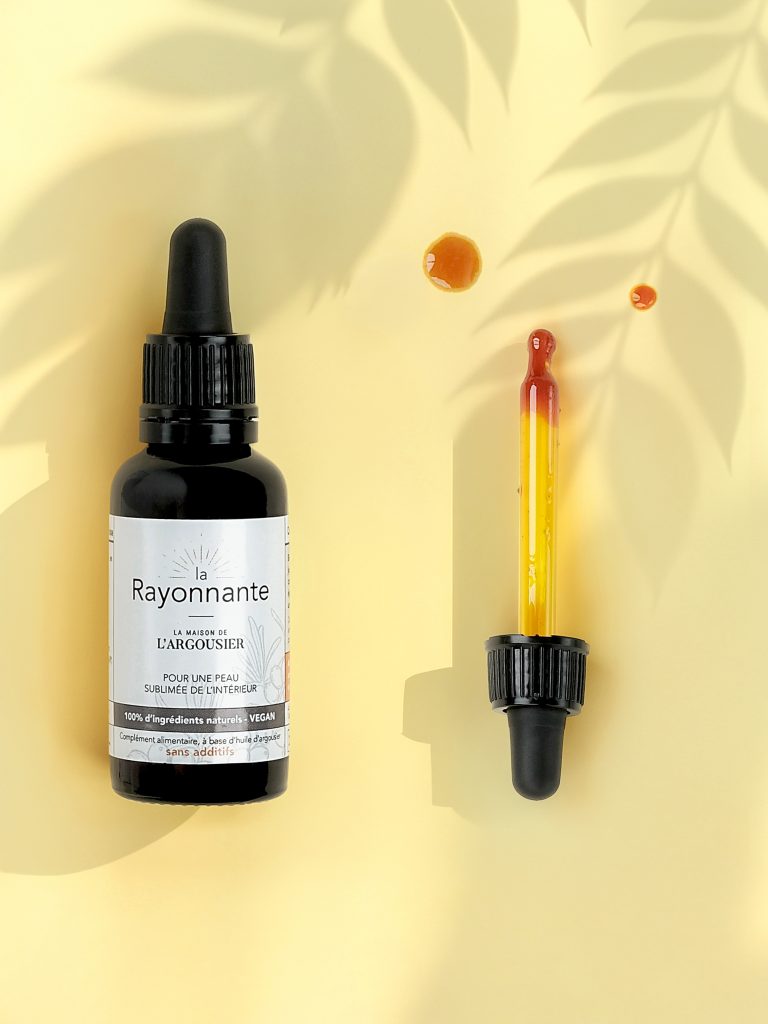
La Maison de l’Argousier propose La Rayonnante, un nutricosmétique qui associe huile d’argousier bio, coenzyme Q10, lutéine et vitamine E. Cette synergie contribue à nourrir les muqueuses, protéger les membranes cellulaires et accompagner la régénération cutanée. De nombreuses utilisatrices rapportent un confort intime amélioré en 3 à 4 semaines d’utilisation.
Pour soutenir l’immunité et la vitalité globale pendant cette période, L’Invincible de la Maison de l’Argousier, à base d’huile d’argousier et de vitamine D3 naturelle, constitue un complément pertinent. Car la ménopause fragilise aussi les défenses naturelles et la santé osseuse.
Plantes et alternatives naturelles : ce que disent vraiment les études
Vous avez probablement entendu parler de la sauge, du trèfle rouge, de l’actée à grappes noires ou de la maca pour accompagner cette transition. Certaines plantes disposent effectivement de données cliniques. L’actée à grappes noires (Cimicifuga racemosa) a fait l’objet de l’étude de Frei-Kleiner et al. (essai randomisé en double aveugle) montrant des effets positifs sur les symptômes climatériques. La maca a également été étudiée pour ses effets sur l’humeur et la fonction sexuelle en période de ménopause.
Ces plantes peuvent compléter une approche globale. Mais avant toute supplémentation, un conseil de professionnel de santé reste indispensable pour écarter les interactions et les contre-indications.
Si vous souhaitez explorer l’ensemble des approches disponibles, notre guide complet des solutions naturelles contre la ménopause détaille chaque option point par point. Phytothérapie, compléments alimentaires, hygiène de vie : vous y trouverez un panorama structuré pour choisir ce qui vous convient le mieux.
L’argousier se distingue par sa richesse exceptionnelle en oméga-7, un acide gras rarement présent dans le règne végétal (seuls 4 fruits au monde en contiennent en quantité significative). C’est cette spécificité qui en fait un allié de choix après la ménopause, notamment pour le confort des muqueuses, le soin de la peau et la vitalité générale.
Votre santé après la ménopause : les rendez-vous à ne pas manquer
Bien vivre la ménopause, c’est aussi anticiper les risques à long terme. La chute des œstrogènes augmente le risque de pathologies vasculaires, l’ostéoporose et certains cancers. Un suivi médical régulier (une fois par an) avec votre médecin ou gynécologue est recommandé : mesure de la tension artérielle, du poids, de la taille, et bilan biologique sanguin.
Entre 50 et 74 ans, participez au programme national de dépistage du cancer du sein par mammographie (tous les 2 ans). Le dépistage du cancer colorectal est également proposé dans cette tranche d’âge. Toute femme ménopausée présentant des saignements doit consulter rapidement.
Enfin, le dispositif « Mon bilan prévention » entre 45 et 50 ans intègre désormais la ménopause. Il est pris en charge à 100 % par l’Assurance Maladie. Profitez-en.
Traverser la ménopause avec confiance
La ménopause représente environ un tiers de la vie d’une femme. Cette période mérite mieux que la résignation. Activité physique régulière, alimentation équilibrée riche en calcium et en oméga, gestion du stress, soin adapté de la peau et des muqueuses : chaque geste compte. L’argousier, grâce à ses oméga-7 et sa richesse en antioxydants, s’intègre naturellement dans cette approche globale pour accompagner votre bien-être au quotidien.
Parlez-en à votre médecin, explorez les solutions qui vous correspondent, et surtout : soyez indulgente avec vous-même. Vous traversez une étape, pas une épreuve.
Chaque femme vit cette transition à sa manière, et les solutions qui fonctionnent varient d’une personne à l’autre. Pour retrouver l’ensemble des ressources, conseils et produits réunis autour d’une approche naturelle de la ménopause, la Maison de l’Argousier a rassemblé sur une même page tout ce qui peut vous accompagner au quotidien. Un point de départ utile pour construire votre propre routine, à votre rythme.
Les informations présentées sont données à titre informatif et ne constituent pas un avis médical. Consultez votre médecin ou pharmacien.
Sources et références
- Larmo PS et al., « Effects of sea buckthorn oil intake on vaginal atrophy in postmenopausal women: a randomized, double-blind, placebo-controlled study », Maturitas, 2014 — Lire sur PubMed
- INSERM, « Ménopause », 2023 — inserm.fr
- Ameli.fr (Assurance Maladie), « Vivre au mieux la ménopause », 2024 — ameli.fr
- Haute Autorité de santé (HAS), « Consultation et prescription médicale d’activité physique à des fins de santé », 2022



 Livraison offerte dès 2 produits achetés !